

24V Lithium Golf Cart Battery, 8kWh LiFePO4
Power for your golf cart.
Key product details
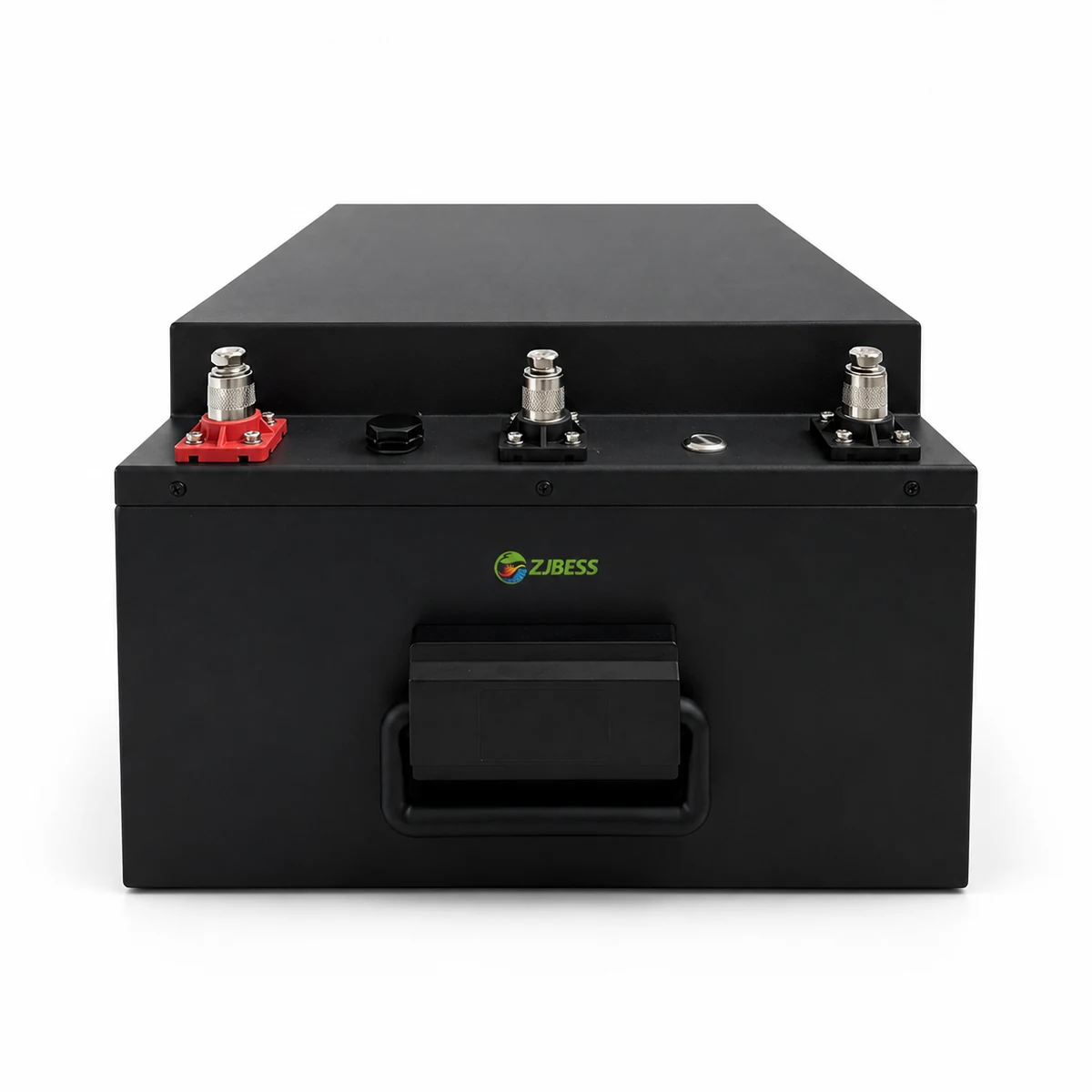
The ZJBESS GC8KW is a 24V lithium golf cart battery with a nominal 25.6V, 314Ah LiFePO4 pack storing 8.04kWh. Confirm the cart controller, charger and fitment before ordering.
GC8KW LiFePO4 Battery Specifications
The ZJBESS GC8KW primary configuration appears first. Optional models are compared only where approved product data has been entered.
How the GC8KW Is Built and Tested
A clear view of the production stages—from cell preparation and module assembly to enclosure integration and final electrical testing.
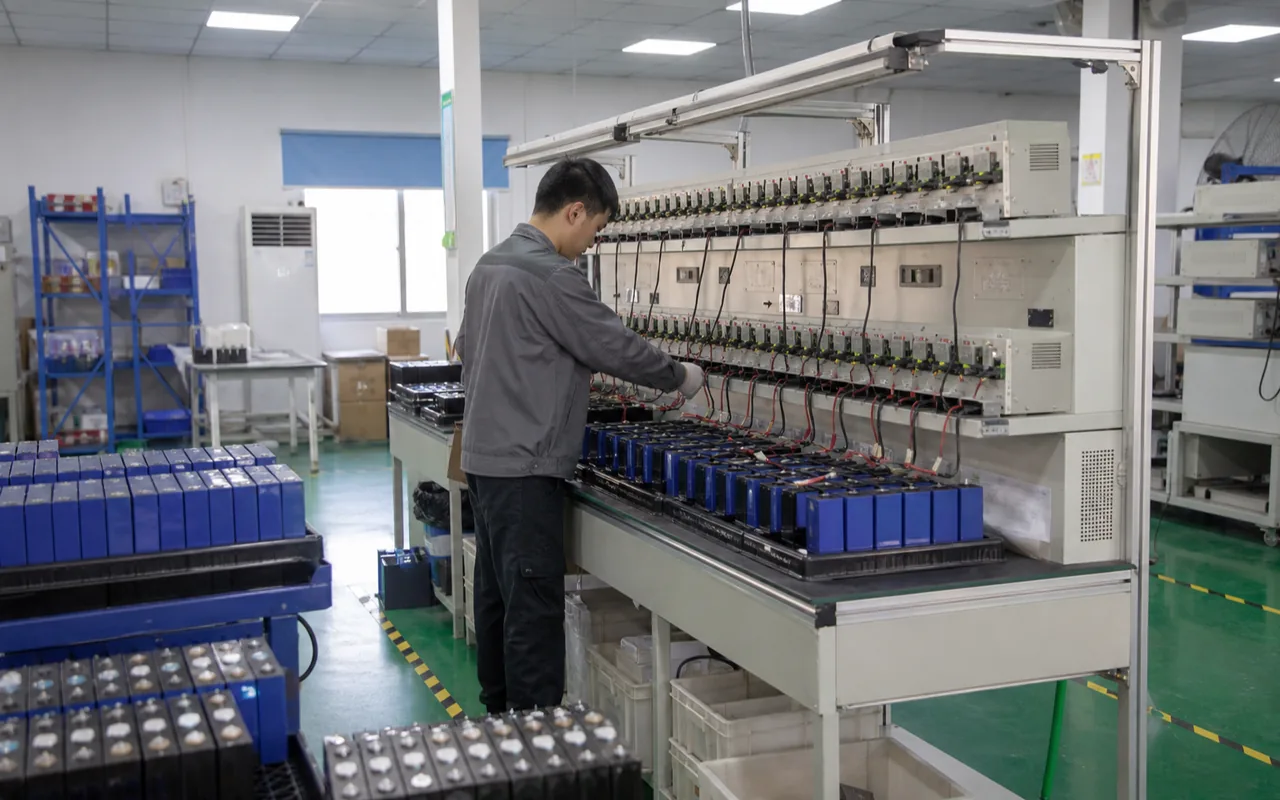
Cell Sorting & Matching
Incoming cells are checked and grouped before they enter the battery pack assembly process.
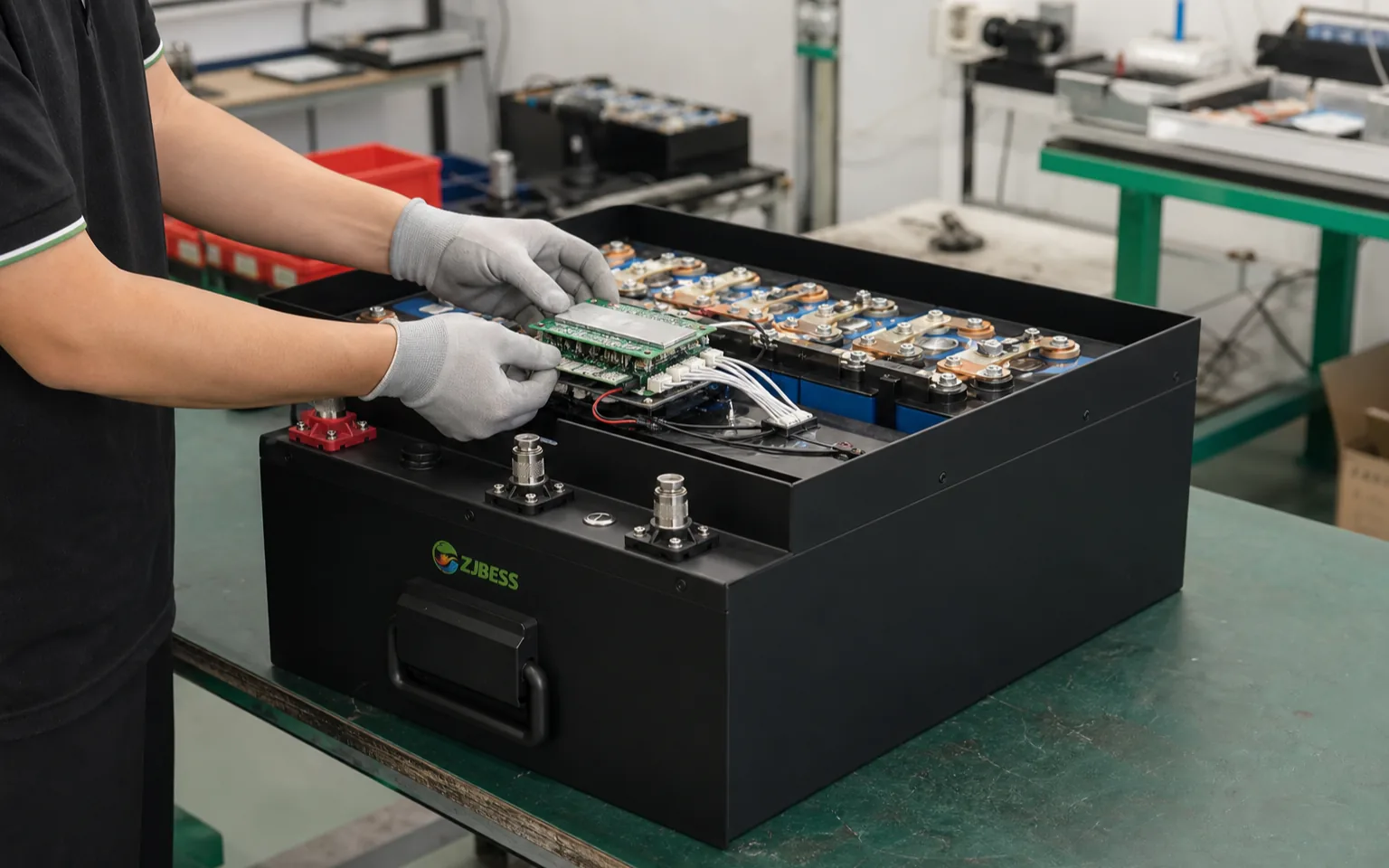
Pack Assembly & BMS Integration
The battery module, wiring and control components are assembled into the pack structure.
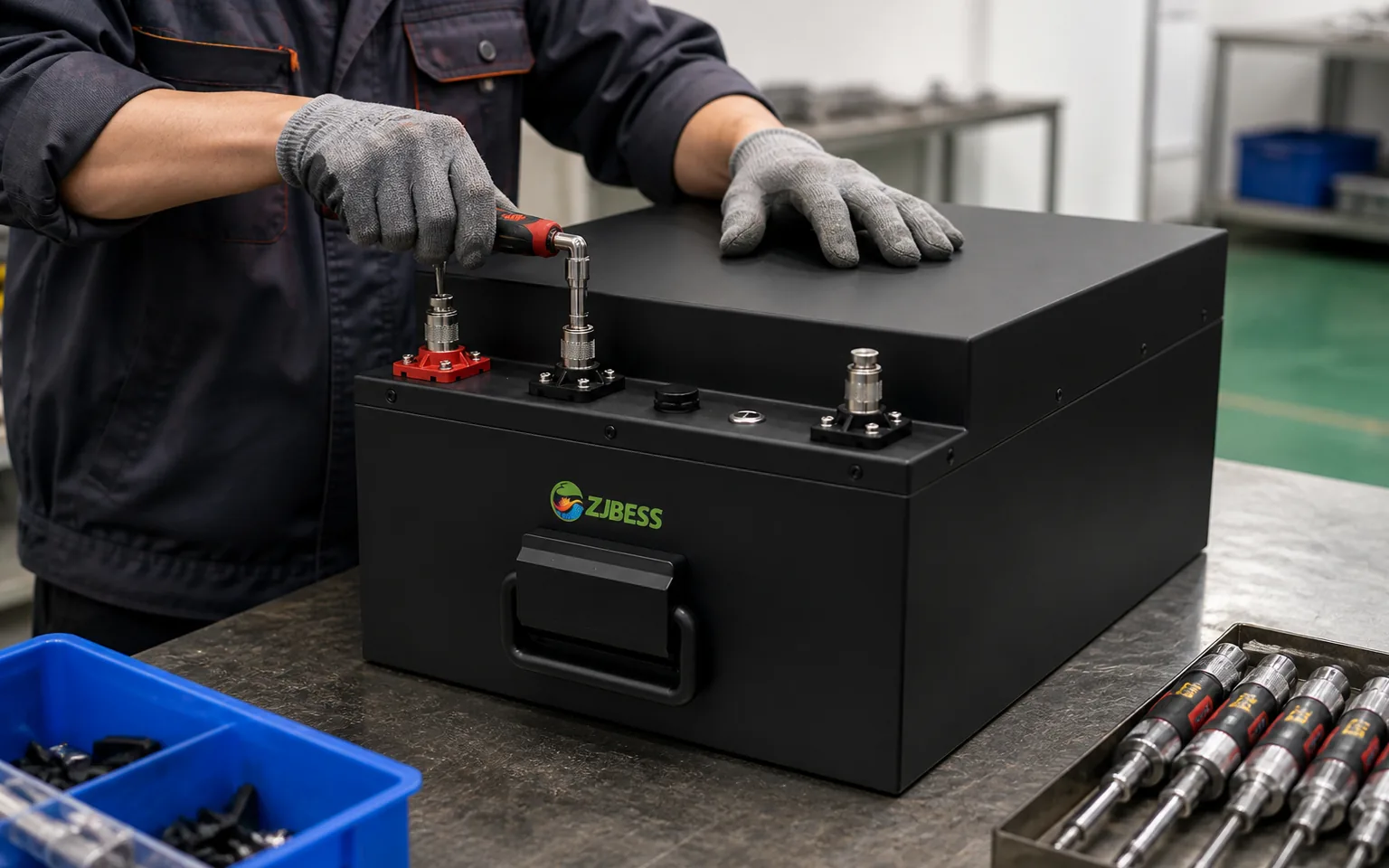
Enclosure & Connector Assembly
The assembled battery pack is fitted into its golf cartbattery enclosure for final integration.
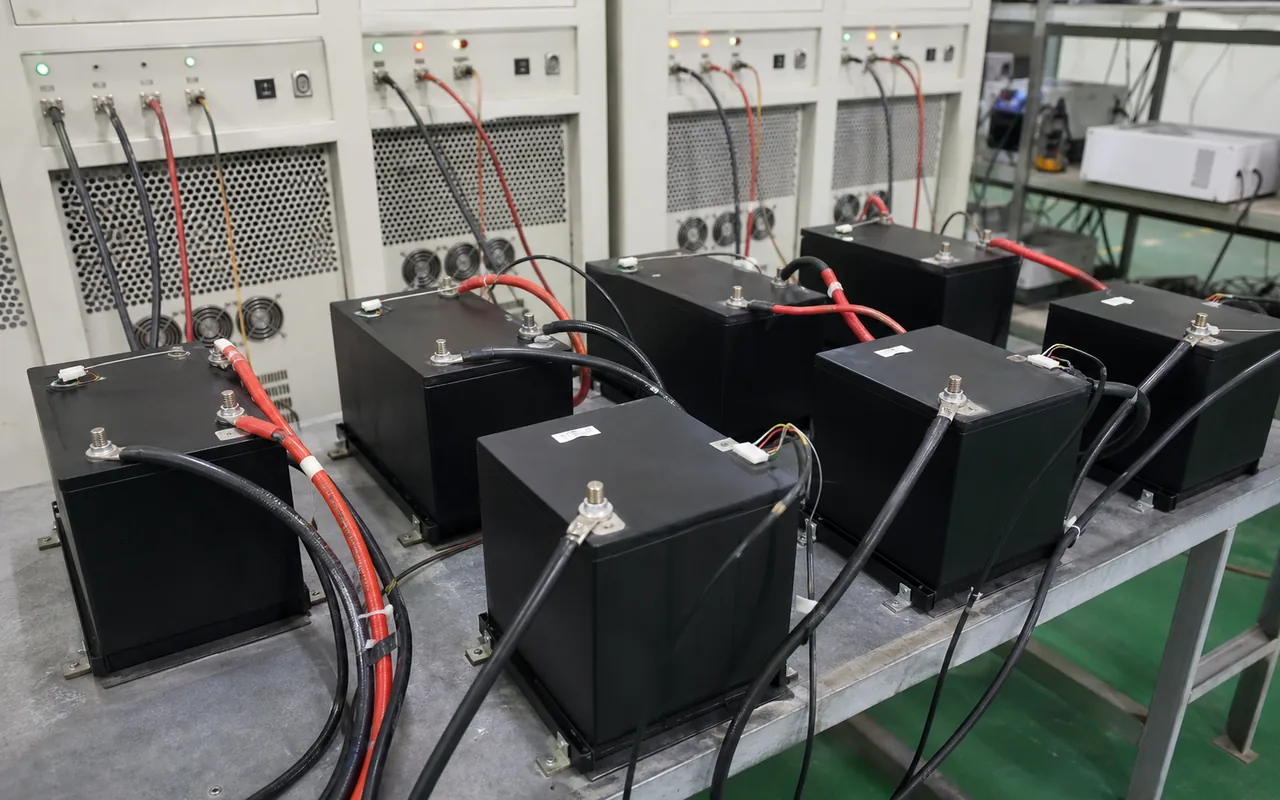
Electrical & Aging Test
Completed units are connected to test equipment for electrical and operating checks before release.
Golf Cart Battery Fitment Guide
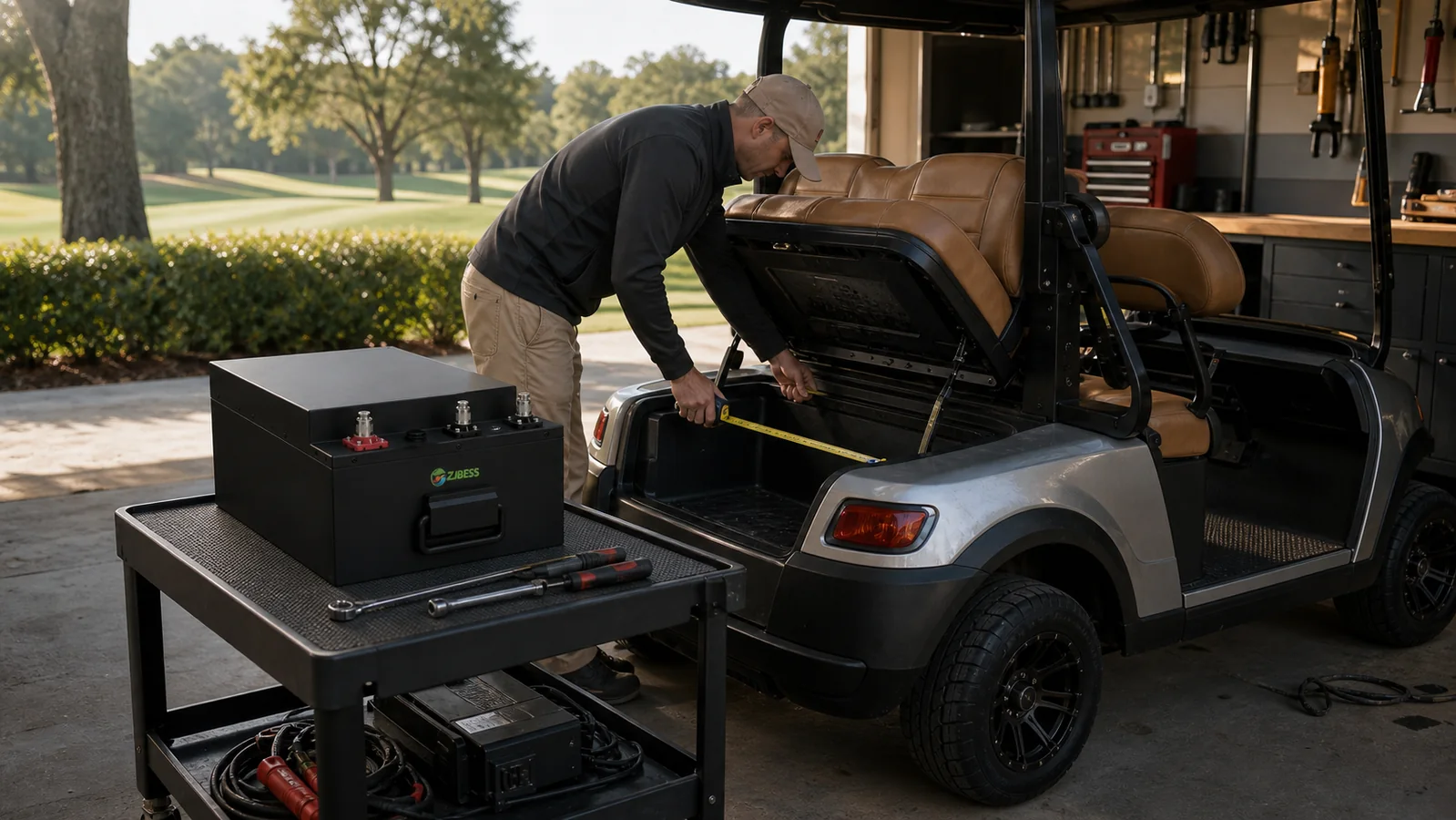
Check voltage, battery compartment size, controller requirements and charger compatibility before choosing a golf cart lithium battery.
-
System voltage
Confirm whether the cart uses a 36V, 48V or another electrical system.
Voltage must match the approved battery configuration.
-
Battery compartment
Measure usable length, width, height and the mounting or retention points.
This confirms physical fit and installation access.
-
Motor and controller
Share the cart brand, model, motor power and controller details.
Load requirements affect the recommended configuration.
-
Charger and connector
Provide charger voltage, plug type and clear connector photographs.
Charging and cable compatibility must be verified.
Replacing Lead-Acid in a 24V Golf Cart
Choose a 24V lithium golf cart battery by the cart’s electrical system, not by its appearance or the number of old battery blocks. GC8KW is a nominal 25.6V LiFePO4 pack for 24V-class applications. It is not a direct replacement for a 36V, 48V or 72V system. Check the controller, charger and existing pack identification first.
The published maximum continuous discharge current is 120A. Compare that limit with the controller’s demand during normal travel, loaded starts and hill climbing. Battery energy describes how much can be stored; it does not establish motor power or a guaranteed acceleration improvement. Confirm any required peak-current behaviour instead of assuming that a lithium conversion removes the controller’s electrical limits.
Fitment is a mechanical check as well as an electrical one. The published enclosure measures 470 × 345 × 235mm and the published gross weight is 45kg. Review tray space, restraint points, cable routing and access to the terminals. Confirm the mounting arrangement for the actual vehicle so the replacement is secured without loading cables or obstructing normal service access.
Use a charger approved for the proposed LiFePO4 pack and its charge settings. A connector that fits does not establish the correct voltage, current or termination behaviour, and an existing lead-acid charger should not be assumed suitable. Include protection, isolation, connector polarity and any vehicle display or interlock requirements in the conversion review before ordering the battery.
Range and Charging Time
GC8KW publishes 8.04kWh nominal energy and 314Ah capacity. The energy follows from nominal 25.6V multiplied by 314Ah, rounded to kilowatt-hours. It is not a distance rating. To estimate range, divide the planned usable battery energy by measured energy consumption per kilometre for the cart, route and loading conditions, then keep the reserve required for the return trip.
Measure the duty that matters: passenger and cargo weight, slopes, tyre condition, speed and stops can change consumption. A route used with one load may not represent a fully occupied cart on a hilly course. Agree a practical evaluation with the actual vehicle rather than selecting a promised kilometre figure from battery capacity alone. Track the starting and finishing charge levels.
The published recommended charge current is no more than 100A. Dividing 314Ah by a constant 100A gives an ideal 3.14-hour calculation, not a promised full charge time. Real charging depends on the starting charge, permitted current, temperature and the finishing stage. The charger’s label current also does not prove that the battery receives that current throughout the charging cycle.
The battery’s 3.5-inch touch screen and published communication options support a model-specific monitoring discussion. Confirm which functions are supplied and how the vehicle user will check charge before a shift or round. During evaluation, record the charger, controller, route and operating conditions with the battery revision. Those records make a later range or charging question more useful than a comparison based only on the old pack’s age.
8kWh 25.6V LiFePO4 Golf Cart Battery FAQs
Practical answers about golf cart compatibility, driving range, hill-climbing performance, lead-acid replacement, charging and installation.
Is this a 24V or 48V golf cart battery?
This is a 25.6V nominal LiFePO4 battery designed for 24V-class electrical systems. It is not a direct replacement for a 36V, 48V or 72V golf cart battery pack.
Before ordering, confirm the cart’s system voltage from the existing battery pack, charger and motor controller. Do not connect two batteries in series unless that configuration has been specifically approved.
How far can a golf cart travel on an 8.04kWh battery?
There is no single fixed mileage because range depends on the golf cart’s energy consumption. Vehicle weight, passenger load, speed, tire pressure, terrain, gradients, accessories, temperature and driving style all affect the result.
A useful estimate is:
Estimated range = 8,040Wh ÷ average energy consumption in Wh per mile or Wh per kilometre
For a more accurate prediction, provide the cart model, route distance, average gradient, passenger load and current battery runtime.
Will this battery improve acceleration and hill-climbing performance?
The battery can support up to 120A of continuous discharge, equivalent to approximately 3.1kW of DC power at its 25.6V nominal voltage. Actual acceleration and climbing ability also depend on the motor controller, motor rating, gearing, vehicle weight and peak-current demand.
Battery capacity mainly determines driving duration. It does not by itself guarantee stronger acceleration or better hill climbing. The controller’s continuous and peak current requirements should be checked before installation.
Can it directly replace a 24V lead-acid golf cart battery pack?
It can be considered for a 24V lead-acid replacement, but it should not be treated as an automatic drop-in upgrade.
The system voltage, controller current, battery compartment, terminal positions, cable size, mounting method, charger profile and battery gauge must all be checked. A LiFePO4 battery also requires a compatible charging profile and must not be subjected to lead-acid equalization or desulfation modes.
What charger should be used with this golf cart battery?
Use a LiFePO4 charger matched to the supplied battery configuration. Confirm the charging voltage, profile and current limit against the approved specifications. Do not rely on the BMS protection cutoff to end normal charging.
Will the battery fit inside my golf cart?
The battery enclosure measures 470 × 345 × 235mm. Check the battery tray’s usable length, width and height, including clearance for terminals, cables, covers and hold-down brackets.
The shipping gross weight is approximately 45kg; the final net battery weight should be confirmed before calculating tray loading or planning manual handling. The battery must be securely restrained so it cannot shift during braking, cornering or travel over uneven ground.
Can the battery be used in rain, cold weather or outdoor golf course conditions?
The IP54 enclosure provides limited protection against dust and water splashes, but the battery should not be submerged, pressure-washed or left where water can collect around the terminals.
The specified discharge temperature range is -30°C to 60°C, while charging is limited to 0°C to 60°C. If the battery temperature is below 0°C, charging should wait until it has returned to an approved temperature. A sheltered, ventilated installation location remains preferable.
How can I check the remaining battery charge?
Battery information can be viewed through the integrated 3.5-inch touchscreen, with Bluetooth available for local app access and Wi-Fi available for connected monitoring.
An original lead-acid battery gauge may not display lithium state of charge accurately because LiFePO4 batteries have a different voltage curve. The battery display or compatible monitoring system should be used as the primary state-of-charge reference.

Get a Wholesale Quote
Tell us the cart model, system voltage, quantity and destination market. We will review fitment and electrical requirements before quotation.