

6.2kW ED Series Solar Inverter
For residential solar projects.
Key product details
The ZJBESS ED6.2kW is a 6.2kW solar inverter for a nominal 48VDC battery system, with 6200W rated output and a published 120A maximum charging current.
- 6200W rated output with 12400VA peak power
- 48VDC nominal battery input
- 60–500VDC MPPT operating range
- Up to 120A maximum charging current
ED Series Solar Inverter Specifications
The ED 6.2kW primary configuration appears first. The 3kW and 11kW models are compared where their verified electrical data differs.
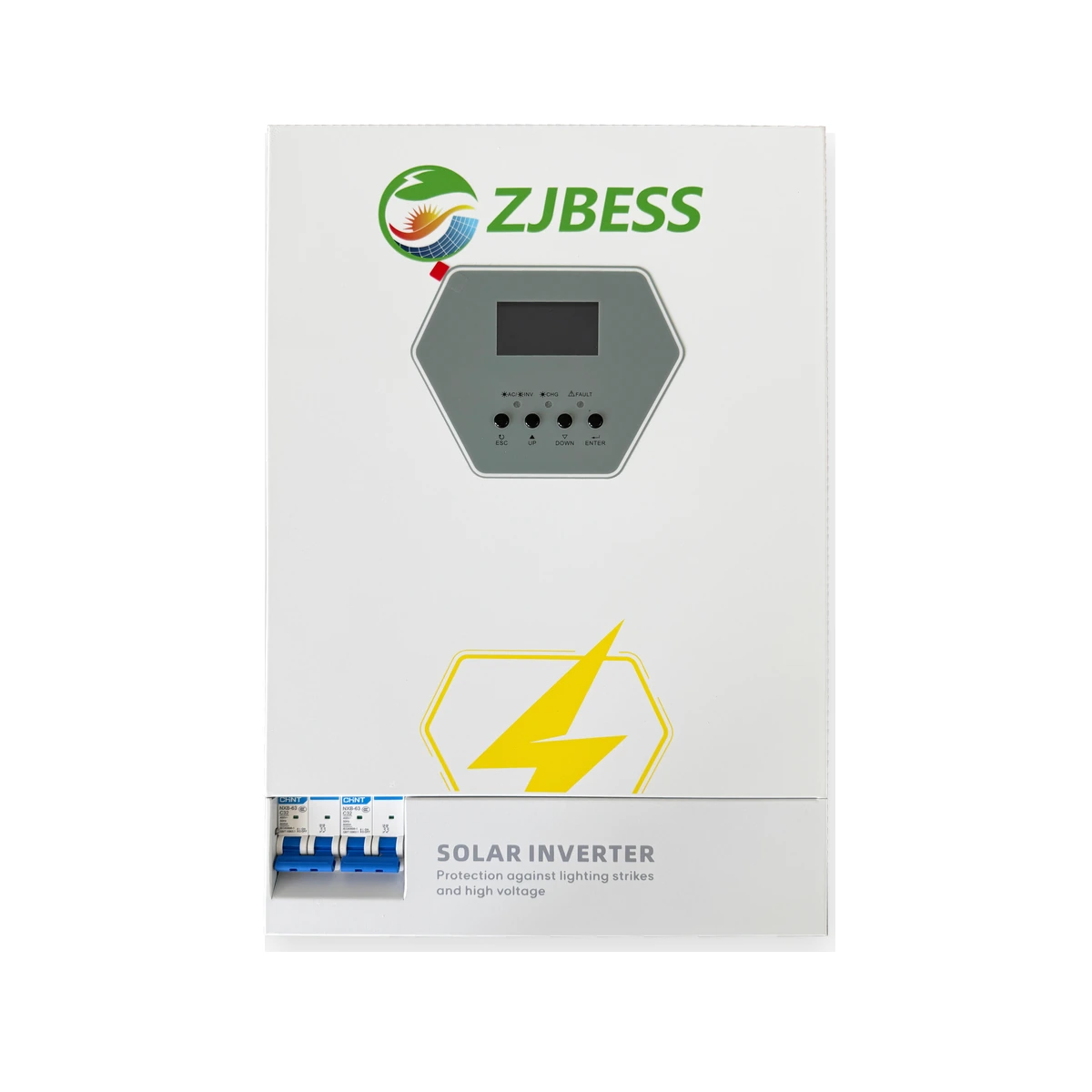
Swipe left or use the arrows to compare ED 3kW and ED11kW.
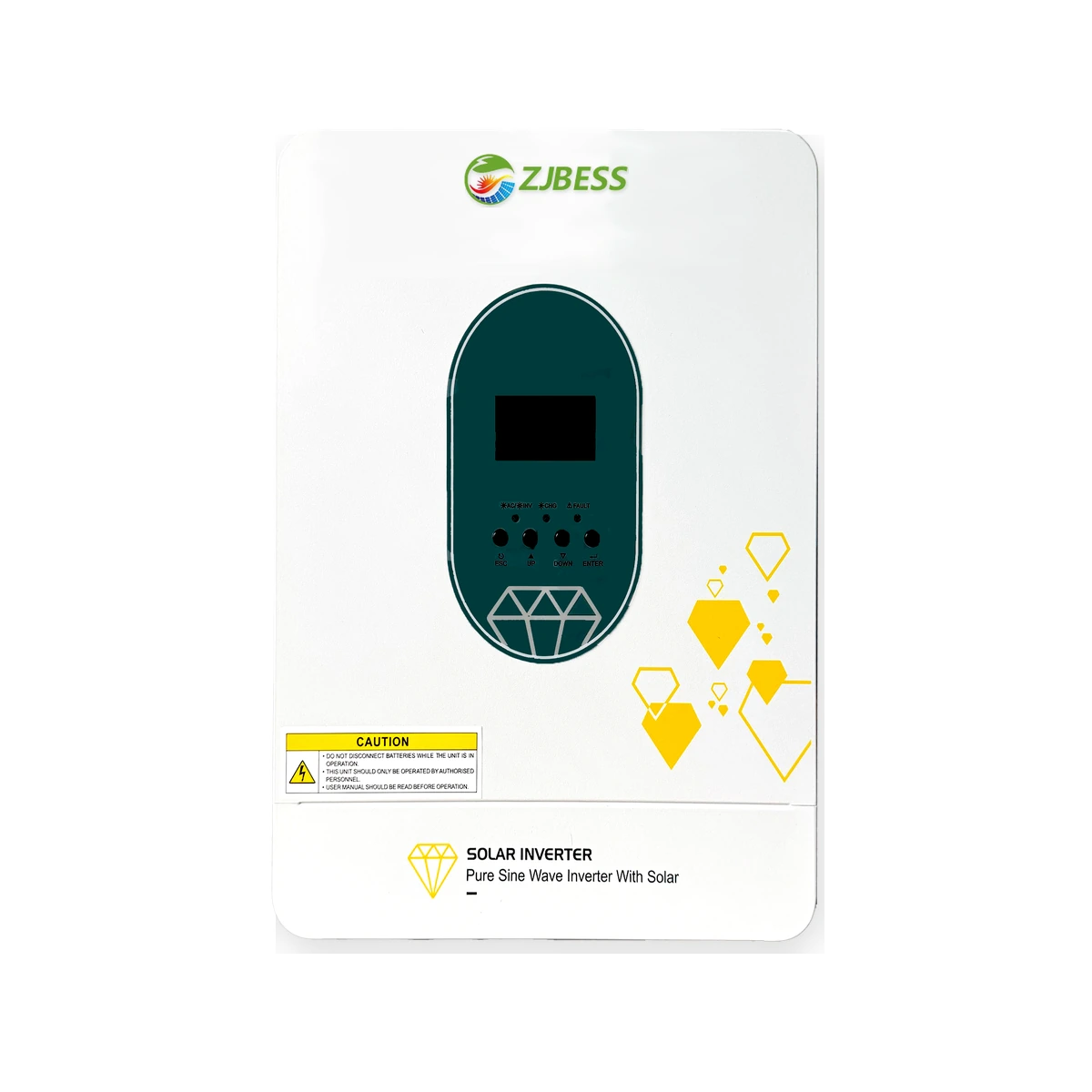
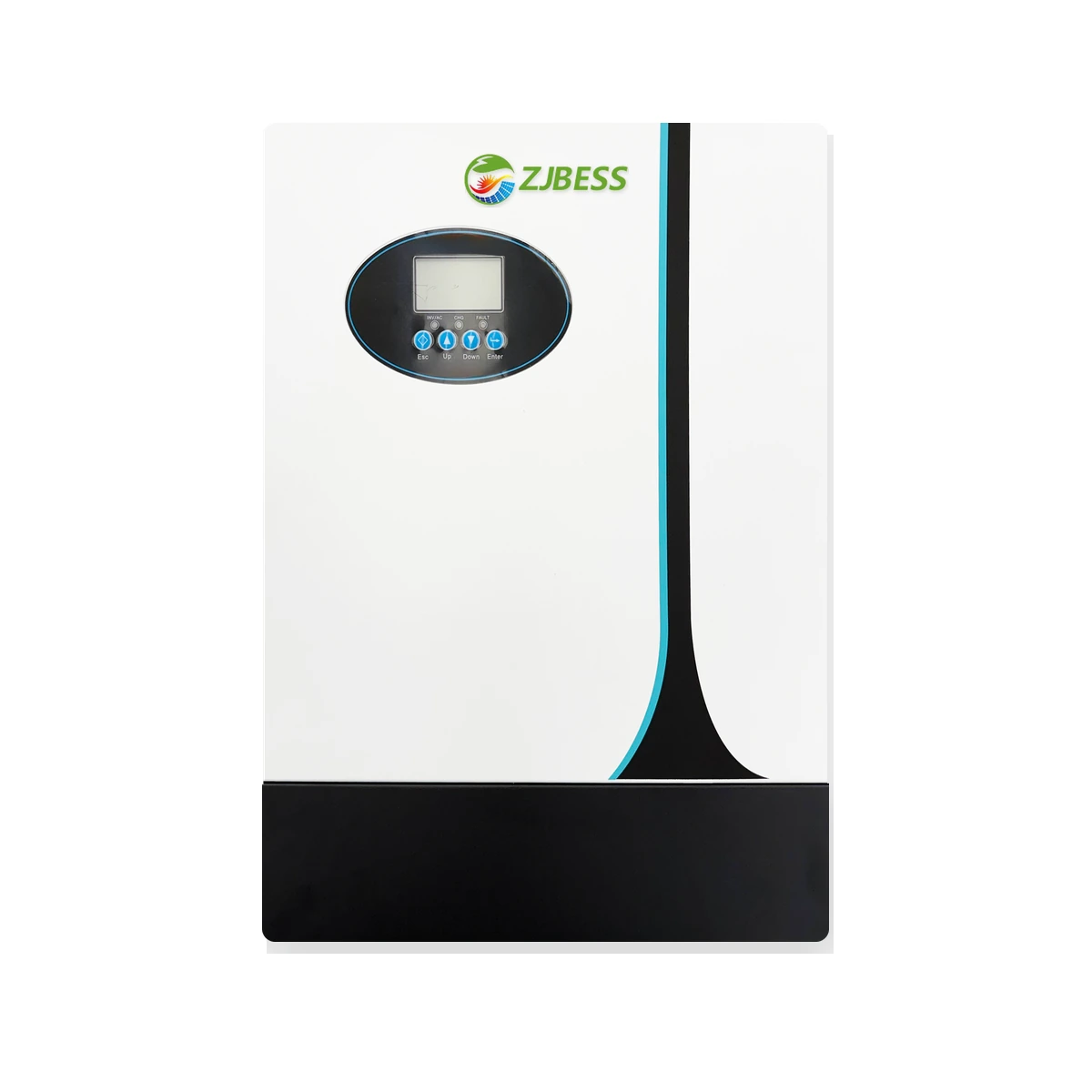
| Model | ED6.2kW | ED 3kW | ED11kW |
|---|---|---|---|
| Rated output power | 6200W | 3000W | 11000W |
| Peak power | 12400VA | 6000VA | 22000VA |
| Output waveform | Pure sine wave | ||
| Rated battery voltage | 48VDC | 24VDC | 48VDC |
| Maximum PV input | 6200W | 3000W | 2 × 5500W |
| MPPT voltage range | 60–500VDC | 30–500VDC | 90–500VDC |
| Maximum PV input current | 18A | 13A | 18A / 18A |
| Maximum charging current | 120A | 100A | 150A |
| Parallel operation | Not supported | Not supported | Supported |
| Grid-connected data | Not published | Published | Published |
Operating Modes & System Compatibility
Confirm the photovoltaic, battery, grid and load requirements before selecting an inverter configuration.
| System input | What to confirm | Why it matters |
|---|---|---|
| Photovoltaic array | Provide array power, string arrangement, voltage and current data. | PV input limits and string design must be reviewed together. |
| Battery system | Provide battery voltage range, model and communication requirements. | Electrical and communication compatibility must be confirmed for the selected equipment. |
| Grid connection | Provide phase, voltage, frequency and applicable local requirements. | The grid connection must match the destination project conditions. |
| Loads and backup | Provide continuous load, surge load and backup priorities. | Load behavior determines the operating mode and power requirements to review. |
Battery Sizing for a 6.2kW Off-Grid Inverter
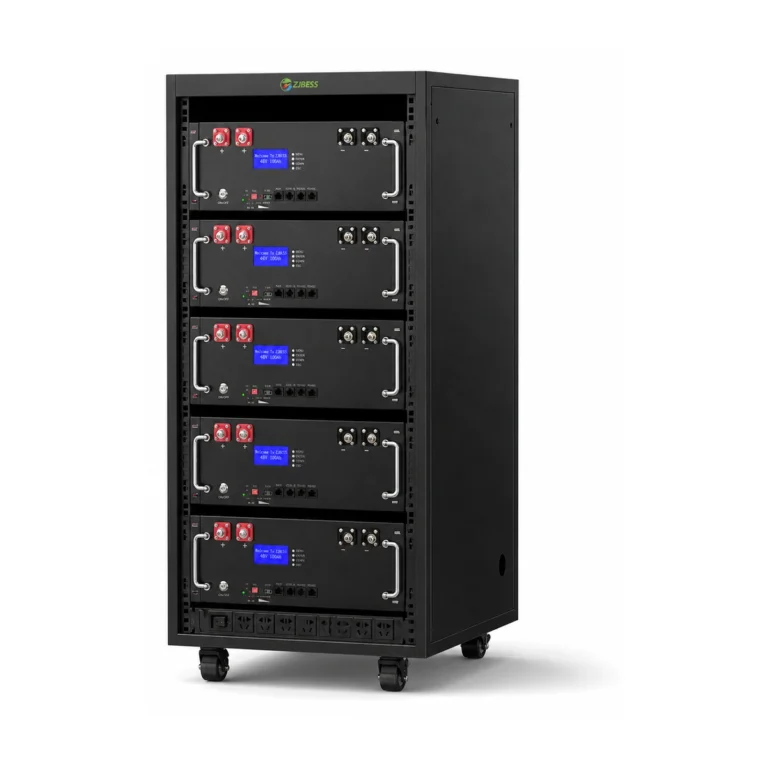
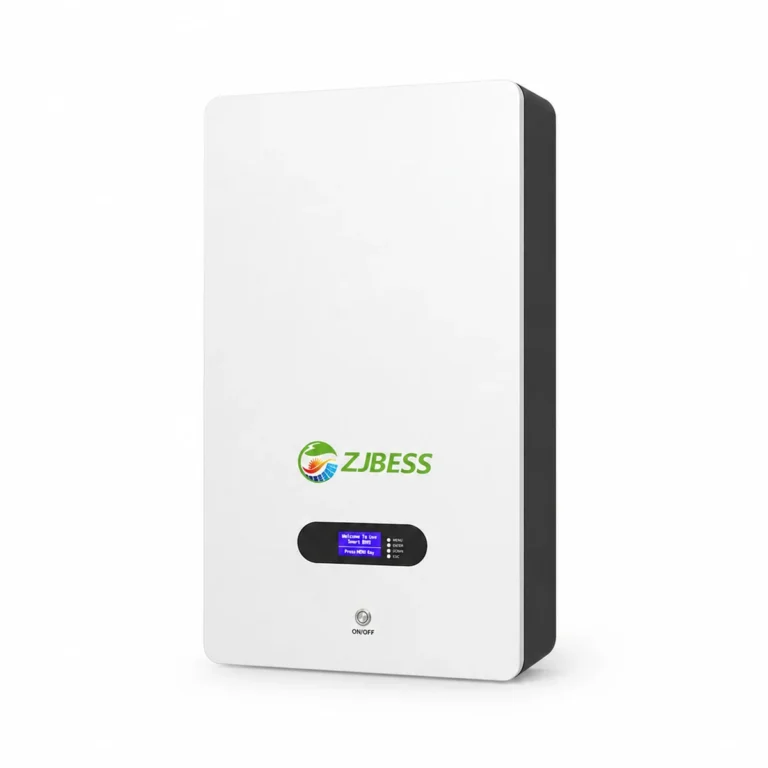
The 6.2kW solar inverter configuration is the 48VDC ED6.2kW, with 6200W rated output and 12400VA published peak power. Do not apply the ED 3kW model’s 24V battery requirement to it. A BG10KW wall mounted battery or LS15KW floor-standing battery is a candidate for a single-battery project when the approved electrical limits and communication arrangement meet the load.
A power calculation explains why capacity alone is insufficient. Dividing 6200W by nominal 51.2V gives about 121A before inverter losses. The actual DC current will be higher and varies with battery voltage. Check the proposed battery’s permitted continuous discharge current and the inverter’s operating voltage window, rather than choosing solely by the 10kWh or 15kWh label.
Choose stored energy around the essential circuits and required running time. BG10KW publishes 10.24kWh and LS15KW publishes 15.36kWh, but usable AC energy is lower after the selected reserve and conversion losses. Record the average load as well as its starting demand. A short high-power appliance and a modest overnight load can require different battery choices.
Battery expansion and inverter expansion are different decisions. The ED6.2kW comparison table states that inverter parallel operation is not supported; the 11kW variant has a different published capability. Do not connect a second ED6.2kW output to increase power. Any approved battery parallel arrangement still needs its own matching, protection, cable and BMS review.
Runtime example. On this 6.2kW inverter, two hours at a steady 2kW AC load requires about 5.6kWh nominal at 90% conversion efficiency and an 80% usable battery fraction. A 10.24kWh BG10KW or 15.36kWh LS15KW can be evaluated. Confirm permitted current, battery voltage window, BMS profile and starting demand for the exact lithium battery for inverter backup. Treat the inverter battery as part of a matched system.
120A Battery Charging and PV Input Limits
The published 120A maximum charging current is a battery-side value. It is not the PV input current rating. ED6.2kW separately lists 6200W maximum PV input, an 18A maximum PV input current and a 60–500VDC MPPT range. Keep those units and sides of the converter separate when preparing the panel schedule or setting battery charge limits.
Use module open-circuit voltage, operating voltage, short-circuit current and temperature data to design the strings. Series connections change voltage; parallel strings change input current. Confirm the hardware’s maximum open-circuit voltage and permitted string arrangement against the selected inverter documentation. An array power total on its own cannot establish a compliant electrical connection.
Charging at the maximum setting is not a daily production guarantee. Available solar energy, simultaneous household demand, battery state of charge and temperature all influence the energy that reaches the battery. Set the charging current within the battery’s permitted range and review the next charging window before increasing capacity or promising a particular backup duration to a customer.
This page treats ED6.2kW as an off-grid or backup configuration. Its comparison table does not publish grid-connected data for this variant; the presence of AC input does not establish grid-export capability. Confirm the operating mode and external switching in the order. During commissioning, record the selected model, firmware, battery settings and PV arrangement so future service refers to the equipment actually installed.
3kW, 6.2kW and 11kW Single-Phase Solar Inverter FAQs
Find answers about choosing the 3kW, 6.2kW or 11kW model, load requirements, PV input, battery voltage, grid use and quotation information.
Should I choose the 3kW, 6.2kW or 11kW solar inverter?
Choose the inverter according to your simultaneous load, largest starting load, battery voltage, solar-array size and future expansion plan.
- 3kW model: Suitable for smaller off-grid or backup systems. It uses a 24V battery, accepts up to 3,000W of PV input and provides up to 6,000VA peak power.
- 6.2kW model: The balanced option for larger homes and small businesses. It uses a 48V battery, supports up to 6,200W of PV input and provides up to 12,400VA peak power.
- 11kW model: Intended for higher simultaneous loads and larger solar arrays. It uses a 48V battery, provides dual MPPT inputs for up to 2 × 5,500W of PV and supports parallel operation.
Do not select the model only from total daily electricity consumption. Inverter power must be sized from the appliances that may operate at the same time.
What appliances can the 6.2kW inverter run?
The 6.2kW model can supply up to 6,200W of continuous battery-mode output and provides pure sine wave AC power at 220V, 230V or 240V.
It may support combinations of refrigerators, lighting, televisions, computers, kitchen appliances, pumps and air conditioners, but their combined running power must remain within the inverter rating. Large motors, compressors and pumps must also be checked for starting surge.
The inverter provides up to 12,400VA peak power, with battery-mode overload support of:
- 105-150% load for up to 11 seconds.
- 150-200% load for up to 2 seconds.
- Above 200% load for approximately 400 milliseconds.
Actual starting performance also depends on the battery BMS, battery voltage drop, cable size and the appliance’s power factor.
What size battery bank does the 6.2kW inverter require?
The 6.2kW inverter requires a nominal 48V battery bank. Battery energy capacity determines backup time, while BMS discharge current determines how much load the system can support.
At full 6.2kW output, the inverter can draw approximately 129A from a 48V battery before conversion losses. The real current may exceed 140A as battery voltage changes and system losses are included.
Therefore, the battery bank, BMS, fuse, isolator, busbars and cables must all support the required continuous and surge current. A battery with sufficient kWh but an undersized BMS may still shut down when a large load starts. Compare nominal capacity, installation format and dimensions in the 48V home battery range.
How many solar panels can be connected to the 6.2kW model?
The 6.2kW model accepts up to 6,200W of PV input through one MPPT tracker. Its MPPT voltage range is 60-500VDC, with an optimal operating range of approximately 300-400VDC, a maximum PV voltage of 500VDC and a maximum PV input current of 18A.
The number of panels per string must be calculated from the selected module’s Voc, Vmp, Isc and temperature coefficients. Cold-weather string Voc must remain below 500V, while hot-weather Vmp should remain high enough for stable MPPT operation.
Panels with different orientations or substantially different shading conditions should not be combined on the same MPPT string. Customers requiring two independently tracked arrays should consider the 11kW dual-MPPT model.
How long will the 6.2kW inverter power my loads during an outage?
Runtime depends on battery energy and average load, not on the inverter’s 6.2kW power rating.
A simplified estimate is:
Backup time = usable battery energy in kWh ÷ average load in kW
For example, a 10kWh battery supplying an average 2kW load provides about five hours of theoretical runtime. Actual runtime will be lower after allowing for the battery reserve, inverter losses, battery condition, temperature and changing loads.
Running the inverter continuously at 6.2kW will consume the same battery much faster than operating only essential loads.
How quickly does the inverter switch to backup power?
Transfer time is rated at up to 10 milliseconds in UPS mode and up to 20 milliseconds in inverter mode.
Many household appliances can continue operating across a short transfer, but compatibility cannot be guaranteed for every server, communication system, medical device or sensitive control circuit. Equipment that requires genuinely uninterrupted power should be assessed separately or protected with a dedicated online UPS.
Can the 6.2kW inverter charge the battery from both solar and grid power?
Yes. The 6.2kW model supports MPPT solar charging and AC charging.
Its limits are:
- Maximum PV charging current: 120A.
- Maximum AC charging current: 100A.
- Maximum total charging current: 120A.
The solar and AC figures should not be added together to claim 220A charging. Charge voltage and current must be configured according to the battery chemistry, capacity and BMS limits.
Can the 6.2kW inverter operate with the utility grid?
The 6.2kW version supports grid-connected operation at 220V, 230V or 240V, with a stated grid-voltage range of 170-265VAC, rated output current of 26.9A and maximum DC-to-AC efficiency of 98%.
Technical grid connection capability does not automatically provide legal permission to export electricity. Before installation, confirm the required anti-islanding protection, export-control method, utility approval and country-specific grid certification.
The 3kW model should not be advertised as grid-tied unless its exact version and grid-connection capability are separately confirmed.
Can I add another inverter if my power requirements increase later?
The 6.2kW model does not support parallel operation, so two units should not be connected together to increase output power.
The 11kW version includes a parallel interface and is the more suitable choice when future multi-inverter expansion is an important requirement. The maximum number of parallel units, shared-battery arrangement and communication method must still be confirmed before system design.
For monitoring, the series includes an LCD for operating mode, load, input and output information, plus RS232 and optional expansion functions for lithium-battery communication, Wi-Fi and dry contacts. Confirm which communication cards are supplied with the ordered model rather than assuming every option is standard.
Get a Wholesale Quote
Tell us the PV array, battery model, grid standard, load requirements and destination market. We will review the inverter configuration before quotation.