

Farm Battery Storage for Solar & Backup
From irrigation to cold storage.
Power planning for your working day.Storage for pumps, cooling and farm loads.
Farm battery storage pairs solar with backup for irrigation, cooling and ventilation, sized around motor starting loads and operating hours.
Planning details
Farm battery storage pairs solar with backup for irrigation, cooling and ventilation, sized around motor starting loads and operating hours.
Discuss Your FarmDifferent Farm Jobs.
Different Power Priorities.
Plan agricultural battery storage around what runs, when it runs and what needs backup. Solar battery storage for farms also needs a clear recharge plan.

Size Farm Battery Storage Around Your Watering Schedule
Irrigation pumps have two jobs for the power system: starting the motor and sustaining the watering cycle.
Review water demand and permitted pumping times alongside solar availability. Include any existing water tank that lets pumping and watering happen at different times.
- Start the pump
- Motor rating, starting method, surge demand and other loads running at the same time.
- Complete the cycle
- Required operating hours, seasonal watering demand and the next charging opportunity.
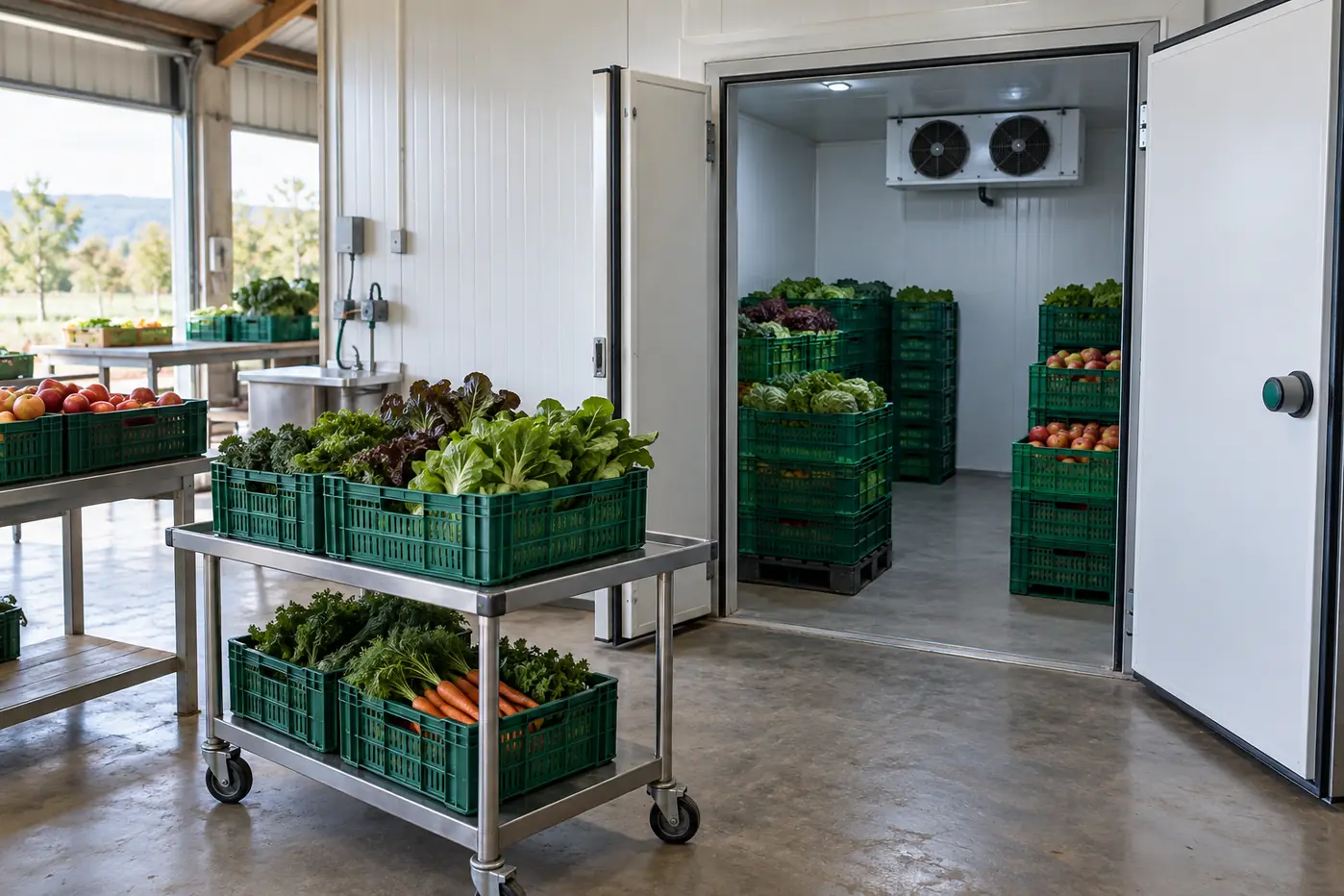
Include Produce Cooling
in Your Backup Priorities
The day’s harvest can change the load long after field work has finished.
A cold room may need power during evening hours and outages. Separate the initial cooling load from normal temperature holding, and review the compressor’s starting requirements.
- Harvest conditions
- Incoming produce, room use, door openings and the cooling equipment’s operating pattern.
- Outage priorities
- The circuits to support, their operating demand and the reserve period required.
Power Needs Beyond the Field
Ventilation, lighting and everyday equipment deserve their own place in the farm’s load plan.
For the farmhouse and cold room, compare the LS15KW and LS20KW; for farm vehicles, see the 8kWh golf cart battery.

Livestock Ventilation & Controls
Fans and controls can become a sustained load during hot weather. Identify essential circuits and review starting sequence, continuous demand and the farm’s existing contingency arrangements.
Bring to the review: fan list, control setup, seasonal hours and the equipment that must remain available.
Review Essential Farm Loads
Farmhouse & After-dark Work
Yard lighting, communications and selected workshop circuits may run after solar generation falls. Separate these needs from heavy tools that can be scheduled or paused.
Bring to the review: evening loads, operating hours and any workshop equipment used at the same time.
Explore Farmhouse StoragePlan for the Demanding Days
An annual electricity total cannot show when pumps start, cooling demand rises or essential loads need reserve power.
Routine day
Match Work to Supply
Record when solar, grid or another supported source is available, alongside the farm’s normal working hours.
Separate Flexible Loads
Identify jobs that can move to another time and jobs tied to watering, cooling or animal-care schedules.
Allow for Evening Use
List the selected loads that continue after daylight and the energy needed before the next recharge.
Useful input: a daily operating schedule, with overlapping equipment marked.
Harvest period
Record the Busier Loads
Add produce handling, longer work hours and cooling demand to the farm’s usual equipment list.
Check What Runs Together
Review pump and compressor starts alongside steady cooling, ventilation and other simultaneous demand.
Plan the Recharge
Check whether the available source and charging window can restore reserve while the farm is still operating.
Useful input: the busiest expected day’s load schedule and seasonal charging conditions.
Grid outage
Name the Essential Circuits
Agree what must be supported and which tasks can pause. A farm-wide connection does not imply farm-wide backup.
Set the Required Period
Define how long those selected loads need supply, including cycling equipment and permitted interruptions.
Confirm the Source Arrangement
Review transfer, isolation and any supported generator or utility input with the selected equipment and installer.
Useful input: outage history, backup priorities and existing generator details, if applicable.
Power, usable energy and the recharge plan need to work together.
Explore Off-grid & Weak-grid StorageTurn Your Farm’s Needs
into a Useful Project Brief
A few equipment details and site photos make the first configuration review more specific.
Send Your Farm Details- Equipment & starting method
- Pump, compressor and fan nameplates; voltage and phase; direct start, soft start or variable-speed drive, where fitted.
- Hours & priorities
- Normal and busy-season schedules, simultaneous loads, selected backup circuits and required operating periods.
- Power sources & existing system
- Solar array and inverter details, grid availability, connection limits and generator information where applicable.
- Locations & installation space
- Distances between buildings, proposed equipment space, temperature, dust, moisture and service access.
Farm Energy Storage Systems: Questions
Resolve the practical details before selecting a battery and system configuration.
Can battery storage power irrigation pumps?
It may support irrigation when the battery, inverter and pump are matched for both starting and continuous operation. Share the motor nameplate, voltage and phase, starting method, watering hours and other simultaneous loads. Battery capacity in kWh alone does not confirm that a pump can start.
How do I choose the battery capacity for a farm?
Start with the equipment schedule, not just the annual electricity bill. Record daily energy use, simultaneous running power, starting demand and the circuits that need reserve. Review normal and busy-season conditions, usable battery energy and opportunities to recharge before selecting a capacity.
Can storage support a farm cold room during outages?
A suitable system can be configured to support selected refrigeration circuits, subject to compressor starting demand, running load, required duration and transfer requirements. Initial produce cooling and routine temperature holding can create different loads. Backup power alone does not establish a guaranteed storage temperature or produce outcome.
Can one system supply several farm buildings?
That depends on the electrical layout, distances, distribution, equipment ratings and circuits selected. Provide a site plan showing the farmhouse, pump area, cold room and livestock buildings. A system review needs to confirm whether a shared arrangement or separate equipment locations fit the site.
Can I use existing solar panels or a generator?
Existing equipment can be assessed as part of the project. Share the solar inverter and generator models, ratings, electrical details and current connection arrangement. Battery communication, charging limits, source acceptance and any transfer or generator controls need to be confirmed for the final configuration.
Where should farm battery storage be installed?
Choose a location that meets the selected model’s installation instructions and the site’s electrical design. Review weather exposure, dust, moisture, temperature, clearances and maintenance access. Include nearby vehicle movements and the position of other farm equipment when reviewing the proposed location.
Tell Us What Keeps Your Farm Working
Share your loads, working hours and site conditions with ZJBESS.