

Commercial & Industrial
Energy Storage Systems
Built around your site.
Defined by your loads.Plan storage around your site and loads.
Plan commercial battery storage around your power demand, operating priorities and installation conditions. Review solar use, peak-demand management and critical-load requirements before choosing equipment.
Planning details
Plan commercial battery storage around your power demand, operating priorities and installation conditions. Review solar use, peak-demand management and critical-load requirements before choosing equipment.
Explore the SystemCommercial Battery Storage: Define the Operating Goal
Define the operating goal before choosing a cabinet or system size.
Make More Use of Solar
Review when solar generation exceeds demand and when your site needs stored energy.
Manage Power Demand
Start with your load profile, peak-demand periods and local electricity tariff.
Plan for Critical Loads
Identify the circuits that matter, the required runtime and the equipment needed for backup.
Start with the Loads That Matter
A bill helps. A load profile and equipment list make the requirements much clearer.
Running & Peak Power
Equipment ratings, measured peak demand and motor or compressor startup loads.
Operating Hours & Energy
Daily schedule, energy use and the periods when storage is needed.
Electrical Supply
Site voltage, phase, frequency, connection limit and existing solar equipment.
Critical Circuits
Loads to retain during an outage, required runtime and acceptable interruption.
See How the System Fits Together
Battery storage is one part of the site. Review the power conversion, controls and electrical connections as a complete arrangement.
Match the System to the Duty
Agree the operating schedule, power limits, metering and control strategy for the site.
Check the Existing Solar System
Review the PV inverter, connection arrangement, export requirements and energy-management interface.
Define the Backup Boundary
Confirm critical circuits, isolation and switching, PCS capability and black-start requirements before specifying backup.
Plan the Space Around the Cabinet
Resolve the installation details before the equipment arrives.
For smaller sites below cabinet scale, compare the 40kWh LS40KW floor-standing battery.
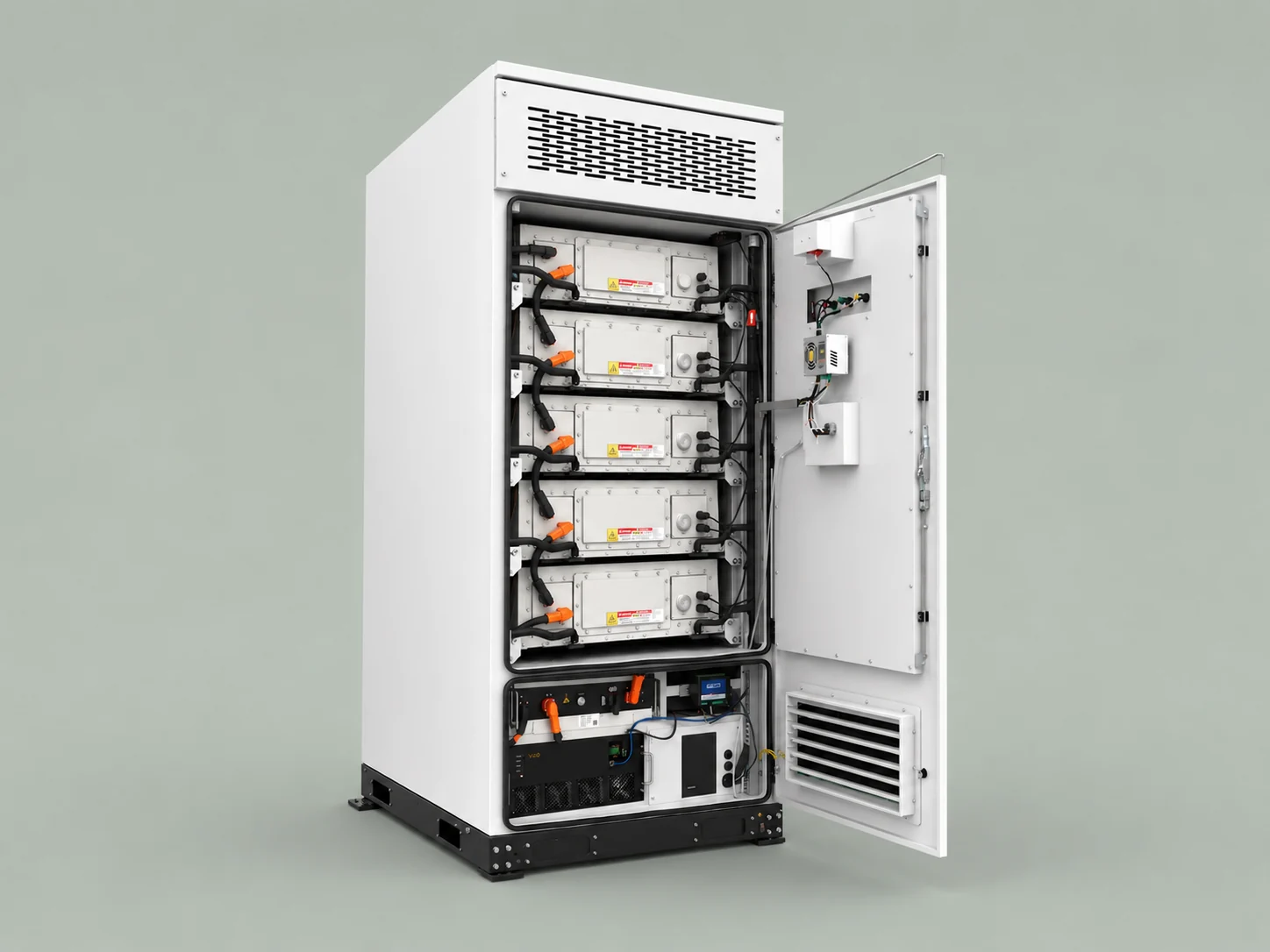
Space & Access
Cabinet footprint, door opening, service clearance and equipment delivery route.
Foundation & Location
Mounting surface, site drainage, surrounding equipment and installation layout.
Ambient Conditions
Temperature, direct sun, ventilation and heat rejection at the proposed location.
Cables & Protection
Cable entry, grounding, disconnects and protection coordination.
Controls & Connectivity
Metering positions, EMS interface, network access and monitoring requirements.
Local Project Requirements
Site approvals, applicable requirements and the installer’s design responsibilities.
Know What Your Project Includes
Turn the proposed system into a clear equipment list and responsibility split.
| Project area | What to review | Confirm in writing |
|---|---|---|
| Storage equipment | Cabinet model, quantity, battery configuration, cooling and protection provisions. | Agreed configuration and equipment list |
| Conversion & control | PCS, BMS / EMS, metering, communication interfaces and operating functions. | Model-specific inclusion and system interfaces |
| Site equipment & installation | Switchgear, transformer if required, cables, foundation, lifting and site installation. | Scope and responsible party for each item |
| Documents & project support | Datasheet, drawings, manuals, market documents and commissioning arrangements. | Required deliverables, language and support terms |
The quoted scope should identify supplied equipment, site works and the party responsible for each interface.
Discuss Your Supply ScopeFrom Site Brief to Agreed Configuration
Four steps to bring the technical and purchasing details together.
- 1
Share the Site Brief
Load profile, electrical supply, solar details and the intended operating goal.
- 2
Review the Configuration
Cabinet quantity, conversion, controls and installation constraints.
- 3
Confirm the Scope
Agreed specification, documents, responsibilities and commercial terms.
- 4
Prepare for Delivery
Packing, destination, site readiness and the installation handover plan.
Commercial & Industrial Energy Storage FAQ
Practical answers on system sizing, solar integration, backup and project quotations.
What does ZJBESS supply as a C&I ESS manufacturer?
ZJBESS manufactures the 261kWh liquid-cooled energy storage cabinet and also supplies the PCS and EMS. For each project, confirm cabinet quantity, PCS power, EMS functions and site integration requirements in the quotation, together with installation and commissioning responsibilities.
How do I choose the right size for a commercial battery storage system?
Specify power in kW and usable energy in kWh separately. Power determines the loads the system can support at one time; usable energy determines how long it can support them. Share your interval load data, equipment list and operating schedule so the review can account for startup peaks, conversion losses and any energy reserved for backup.
How can battery storage help manage peak demand?
Storage can discharge during high-demand periods to reduce the power drawn from the grid. The required power and discharge duration depend on your load profile and how the utility measures demand. Review the tariff, charging opportunities and control strategy together before estimating any savings; a monthly energy total alone is not enough.
Can commercial battery storage work with an existing solar system?
An existing solar system can be assessed for integration with battery storage. Share the PV inverter make and model, solar capacity and single-line diagram. The design review should check the connection arrangement, metering, export limits and communication with the energy management system. Compatibility depends on the equipment and proposed controls.
Can the system keep my business running during a power outage?
Backup is possible when the complete system is designed for it. Identify the essential circuits, their running and startup power, the required runtime and the interruption those loads can tolerate. The design must then address grid isolation, switching, PCS capability and control logic. A storage cabinet alone does not establish automatic or uninterrupted backup.
What should I check before choosing an installation location?
Check the cabinet footprint, foundation, delivery access, door opening and maintenance clearances first. Then review temperature, sun exposure, ventilation, drainage, cable routes and grounding. Indoor or outdoor suitability must be verified against the selected model’s installation instructions and the local project requirements.
What should I send ZJBESS to request a project quotation?
Send the project location, voltage and phase, load profile or electricity bills, equipment list, existing solar details and intended use. Add the proposed installation location and any backup requirement. The quotation review should define cabinet quantity, PCS and EMS, site equipment, documents, delivery destination, installation and commissioning responsibilities. If some details are unavailable, identify them in your enquiry so the next review can focus on those gaps.
What Is Included in a C&I Energy Storage System?
A battery energy storage system includes cells and battery racks or clusters, the BMS, the power conversion system (PCS), the energy management system (EMS), thermal management and fire protection. ZJBESS supplies the PCS and EMS as part of the agreed equipment scope. Use the 261kWh cabinet specification to verify the cabinet interfaces. Confirm site switchgear, controls, civil works and commissioning separately.
| Use | Potential value | Data to send |
|---|---|---|
| Peak shaving | Reduce demand peaks where tariff or site limits make them costly. | Interval load profile and applicable demand terms. |
| Solar self-use | Shift surplus PV energy into later demand. | PV generation, load curves and any export limits. |
| Critical-load backup | Carry selected loads during an interruption. | Critical circuits, starting power and target autonomy. |
| Off-grid microgrid | Coordinate storage, solar and dispatchable generation. | Load schedule, existing generator and controls, PV data and reserve requirement. |
More Questions About Commercial ESS
Can one cabinet support both solar self-use and backup?
The approved system topology and controls determine which modes are available. Agree a minimum reserve for backup and check whether the remaining usable capacity meets the solar objective.
What data is needed before selecting PCS power?
Share the site voltage and phases, interval load, starting demand, critical circuits, and the available grid or generator input.
Let’s Plan Your Storage Project
Tell us about your site, equipment loads and intended operating goal.