

13.2kW Hybrid Inverter, Single-Phase, Dual MPPT
For residential solar projects.
Key product details
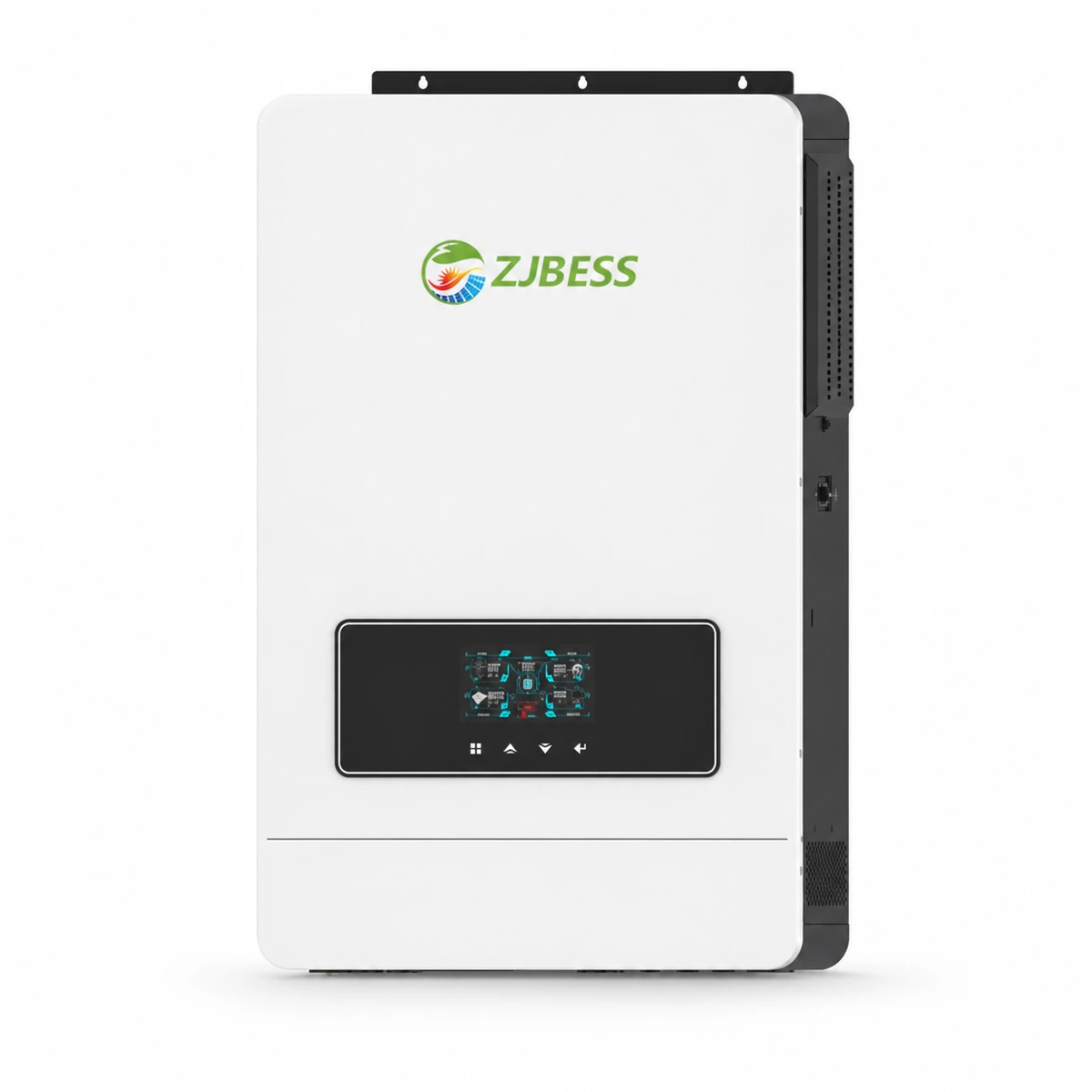
The ZJBESS MAX-II-13.2KW is a 13.2kW hybrid inverter with single-phase output, two MPPT inputs and a nominal 48VDC battery system. Review the grid-tie and off-grid configuration against the project requirements.
- 13.2kW / 13.2kVA rated single-phase output
- 8000W + 8000W maximum PV input power
- 48VDC battery system with up to 160A total charging current
- PV array, battery, grid and backup requirements confirmed before quotation
MAX-II-13.2KW Inverter Specifications
Review the published grid-tie, off-grid, PV, AC input, battery charging, interface and environmental data for the MAX-II-13.2KW.
Operating Modes & System Compatibility
Confirm the photovoltaic, battery, grid and load requirements before selecting an inverter configuration.
| System input | What to confirm | Why it matters |
|---|---|---|
| PV input 1 and 2 | Provide module data, total power, string voltage, current and arrangement for each PV input. | Both inputs must remain within the published voltage, current and power limits. |
| 48V battery system | Provide battery model, operating voltage range, charge-current limit and BMS communication requirement. | Nominal 48V alone does not confirm electrical or communication compatibility. |
| Grid connection | Provide destination country, single-phase voltage, frequency and applicable connection requirements. | Published voltage data does not replace local compliance review. |
| Loads and backup | List continuous loads, surge loads, backup priorities and any loads intended for the secondary output. | Rated power and dual-output operation must be checked against the real load profile. |
Batteries That Pair with This Hybrid Inverter
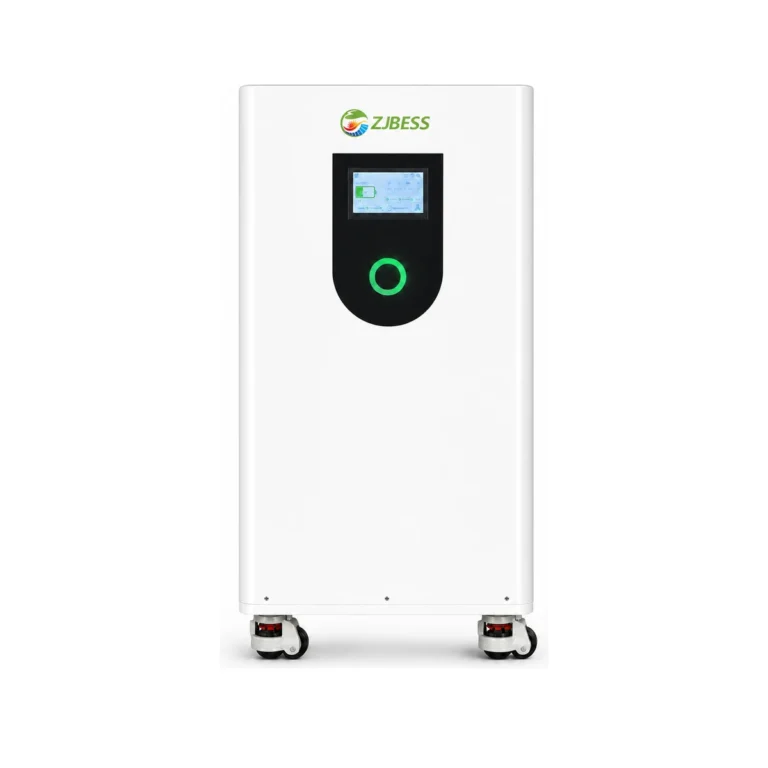
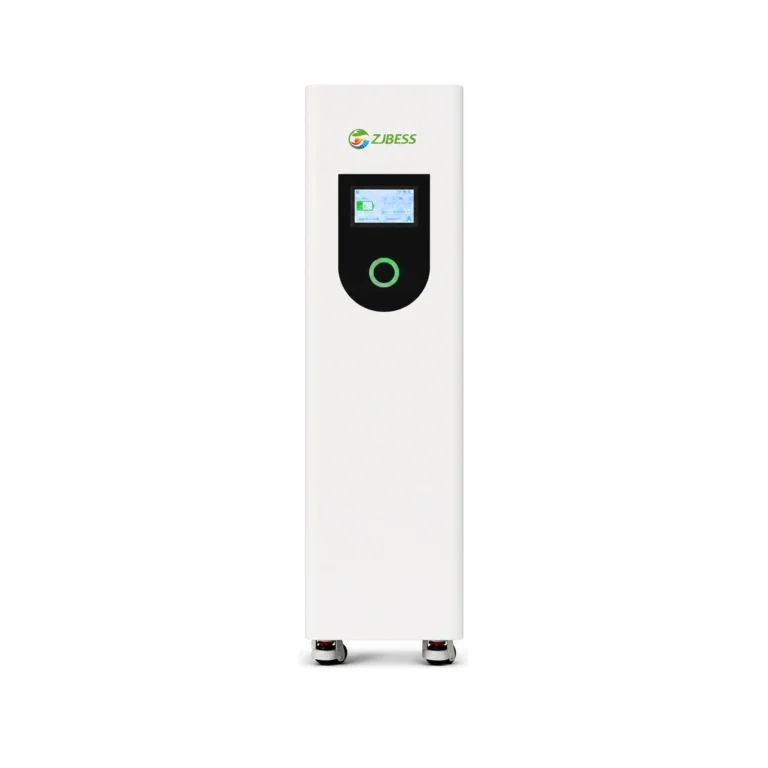
The 13.2kW hybrid inverter uses a nominal 48VDC battery system. ZJBESS home battery candidates include the 15.36kWh LS15KW, 20.48kWh LS20KW and 10.24kWh BG10KW. Start with the required battery energy and installation format, then verify operating voltage, continuous discharge capability and the exact BMS protocol. A nominal voltage match alone does not complete the pairing check.
Full inverter output needs a battery power check as well as an energy check. At 13.2kW AC, nominal 51.2V battery voltage and the published 94% battery-mode efficiency, an illustrative calculation gives about 274A DC. Current rises as battery voltage falls. This is a planning calculation, not a tested current requirement for every operating condition.
The home battery pages publish up to 8kW per unit. Two matching, compatible units are therefore a starting power configuration for a full-output discussion, rather than a promise that any two batteries will deliver 13.2kW continuously. Confirm discharge limits, current sharing, protection, cable arrangement and the permitted operating window for the proposed battery revision.
Charging is a separate limit: the inverter publishes 160A maximum solar charging, 140A maximum AC charging and 160A maximum total charging. Do not add the two source limits together. Agree charge settings against the battery limit and temperature range. Send the inverter firmware, battery model and proposed parallel arrangement so these settings can be checked before the order.
Runtime example. On this 13.2kW inverter, two hours at a steady 5kW AC load requires about 13.9kWh nominal at 90% conversion efficiency and an 80% usable battery fraction. A 15.36kWh LS15KW or 20.48kWh LS20KW can be evaluated for the example energy requirement. Higher output may call for a matching parallel bank. Confirm permitted current, battery voltage window, BMS profile and starting demand for the exact lithium battery for inverter backup. Treat the inverter battery as part of a matched system.
Where a 230V Hybrid Inverter Fits
The MAX-II is single-phase, with published nominal output options of 220V, 230V or 240V. Its published nominal grid output current is 57.3A. Match the selected voltage and frequency to the site and identify which circuits belong on the inverter supply. A three-phase building does not make this inverter a three-phase source.
The two MPPT inputs allow separate PV string groups to be reviewed. The published PV allowance is 8000W plus 8000W, with a 90–450VDC MPPT range and 500VDC maximum PV voltage. Panel nameplate power does not raise the 13.2kW AC rating. Use the actual module voltage, current and temperature data to design each string.
For backup, list the circuits that must remain supplied and distinguish continuous demand from motor or compressor starting demand. Check the approved backup connection, transfer behaviour and battery reserve together. Grid-tie and off-grid data describe operating functions; they do not establish uninterrupted supply to every circuit or approval to export energy at a particular site.
Generator-assisted projects need their own input review. Provide the generator voltage, frequency, rating and intended charging duty before assuming it can share the AC arrangement. The quotation should identify the inverter and battery supply, external protection, transfer equipment and commissioning responsibilities. Bring the PV schedule and a single-line diagram into the same review so the proposed operating modes agree with the installed wiring.
MAX-II 13.2kW Single-Phase Hybrid Solar Inverter FAQs
Practical answers about whole-home loads, dual MPPT solar input, 48V battery sizing, backup operation, charging and installation.
Can a 13.2kW inverter power an entire home?
A 13.2kW inverter can support a large group of household or light-commercial loads, provided their combined continuous power remains within 13.2kW and the AC current remains within the installation limits.
At 230V, the inverter’s nominal output current is approximately 57.3A. Whether it can run air conditioners, pumps, ovens, water heaters or workshop equipment simultaneously depends on each appliance’s running power and starting surge. High-starting-current loads must be checked separately because their nameplate power may be much lower than their momentary startup demand.
Is the MAX-II 13.2kW inverter single-phase or three-phase?
It is a single-phase inverter with selectable nominal output voltages of 220V, 230V or 240V.
It does not directly provide three-phase output and should not be treated as a replacement for a three-phase inverter. Sites with a three-phase utility supply must confirm phase allocation, permitted phase imbalance, metering requirements and whether the intended loads are single-phase or three-phase.
Why can a 13.2kW inverter connect up to 16kW of solar panels?
The inverter accepts up to two 8,000W PV inputs, for a total maximum PV array power of 16,000W. Installing more PV capacity than the 13.2kW AC output can improve energy production during mornings, afternoons and lower-irradiance conditions.
The inverter will still limit output according to its operating and charging limits, so peak solar production may be clipped. The appropriate DC-to-AC ratio depends on panel orientation, temperature, local irradiance, battery charging demand and grid-export rules.
How should the solar strings be designed for the two MPPT inputs?
The inverter has two MPPT inputs with an operating range of 90-450VDC, a nominal PV voltage of 360VDC and a maximum PV voltage of 500VDC.
Each string must be designed so that:
- Cold-weather open-circuit voltage remains below 500V.
- Operating voltage stays within the 90-450V MPPT range.
- Hot-weather operating voltage remains high enough for stable MPPT operation.
- String current remains within the permitted input-current limit.
- The two trackers receive electrically suitable strings for their panel orientation and shading conditions.
The exact panel model, Voc, Vmp, Isc, temperature coefficient and minimum site temperature are required before confirming the number of modules per string.
What size 48V battery bank is needed for a 13.2kW inverter?
The inverter uses a nominal 48V battery system, but battery capacity and battery discharge current must be sized separately.
Delivering 13.2kW from a 48V battery requires approximately 275A before conversion losses and can approach 300A under real operating conditions. The combined battery BMS, busbars, fuses, isolators and DC cables must therefore support the required continuous and surge current.
Battery capacity determines runtime. For example, increasing the battery from 10kWh to 20kWh increases the available energy but does not automatically increase the BMS discharge-current capability. Use the 48V LiFePO4 home battery comparison to shortlist cabinets by energy and dimensions, then verify the discharge current and BMS limits for the complete bank.
Can the inverter operate without a battery?
Yes. The inverter supports battery-free operation in suitable solar and grid-connected configurations.
However, a battery is still required when stored energy is needed after sunset, during insufficient solar production or during a grid outage. Battery-free operation should not be assumed to provide stable backup for fluctuating loads, passing clouds or equipment with high starting currents.
Will the inverter keep appliances running during a power outage?
The inverter supports grid-connected, off-grid and hybrid operating modes, but uninterrupted backup depends on the complete system configuration.
Critical loads must be connected through the correct backup output and protection architecture. Battery capacity, BMS discharge current, load priority and starting surge must all be reviewed. Because a verified transfer-time specification is not yet available, the system should not be promoted as UPS-grade backup for servers, medical equipment or other interruption-sensitive devices without further testing.
Can the battery be charged from both solar power and the grid?
Yes. The inverter includes solar and AC battery-charging functions. Maximum solar charging current is 160A, maximum AC charging current is 140A and the stated maximum total charging current is 160A.
This means the solar and AC figures should not be added together to claim 300A charging. The final charging current, voltage and priority settings must remain within the battery manufacturer’s limits and the BMS communication requirements.
What battery communication and remote monitoring options are available?
The inverter provides RS232, RS485 and BMS communication ports. Wi-Fi and GPRS monitoring are available for compatible iOS and Android applications.
Physical communication ports alone do not guarantee compatibility with every lithium battery. The exact battery model, BMS protocol and inverter firmware version must be checked before installation. The mobile application, data hosting region and whether the Wi-Fi or GPRS module is included should also be confirmed when ordering.
What installation conditions are required for a 13.2kW inverter?
The inverter measures approximately 580 × 370 × 136mm and operates from -10°C to 50°C. It includes an anti-dust design, but that does not establish an outdoor weatherproof rating.
Install it in a dry, ventilated and serviceable location away from direct rain, flooding, combustible materials and excessive heat. The installation must also provide suitable clearances, grounding, DC isolation, PV protection, battery overcurrent protection and AC protection.
At 230V, nominal output current is 57.3A and maximum AC input current is 80A. Cable sizes, breakers and isolators must be selected by a qualified installer according to local electrical codes, installation temperature and cable-routing conditions.

Get a Wholesale Quote
Tell us the PV array, battery model, grid standard, load requirements and destination market. We will review the inverter configuration before quotation.