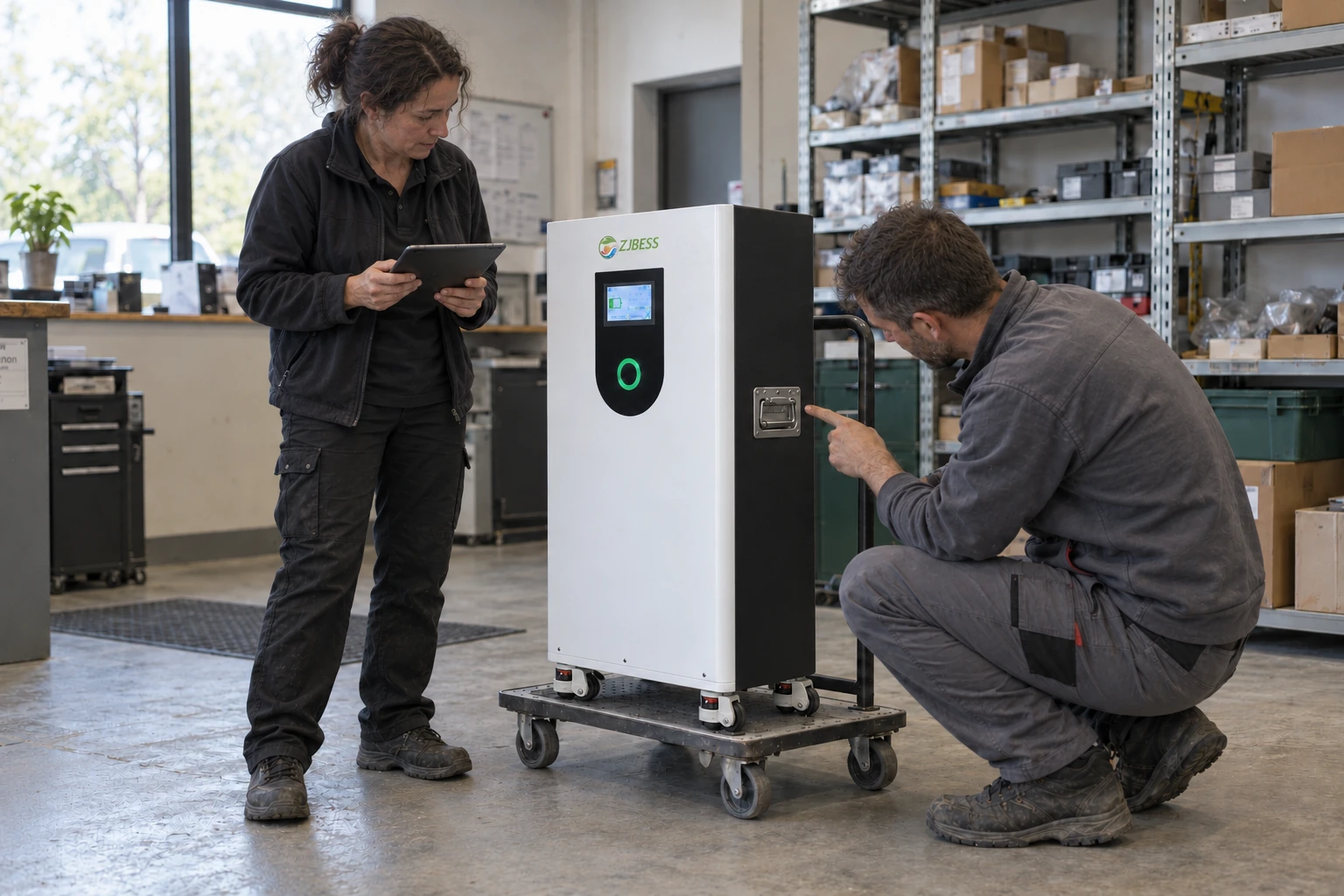
An alarm photograph may start a home battery warranty claim, but it leaves several questions unanswered. Which unit is involved? What happened, and what do the applicable terms cover? For a distributor, the work also includes agreeing how the remedy will reach the customer. Even a free replacement can leave transport and site work to arrange.
Before the first order, check that the supplier’s written warranty supports the service you intend to offer your customer. During a claim, record the technical finding, coverage decision and delivery schedule separately. You can then tell the customer what has been agreed and what still needs an answer.
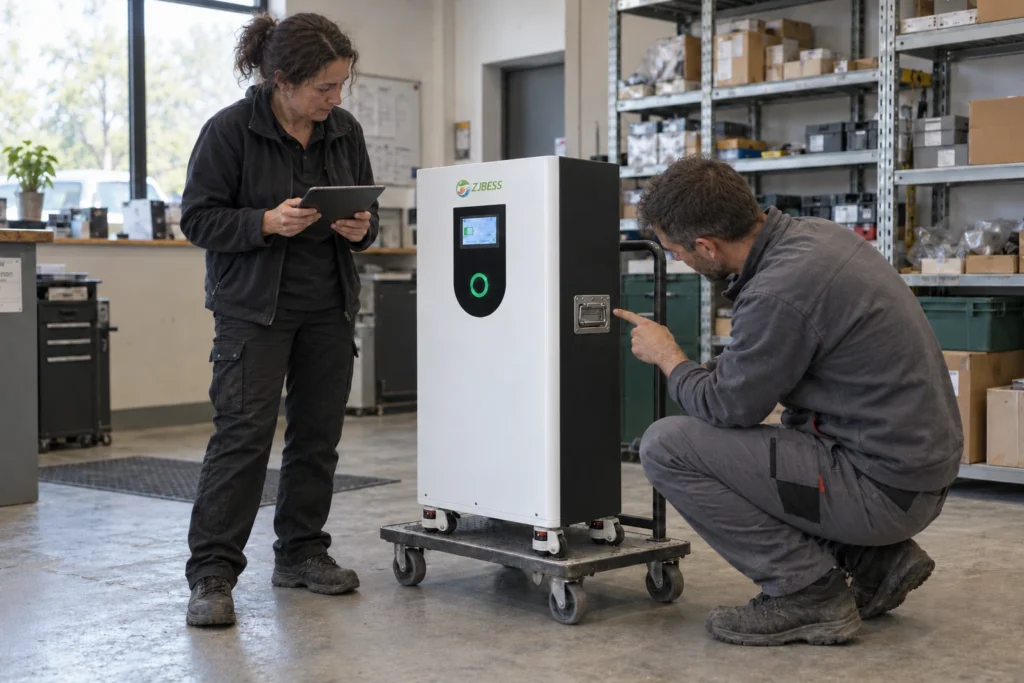
Start with the event rather than a diagnosis
Consider an invented report: a battery stopped discharging during a power outage, and an installer saw an alarm. That observation starts a service review. It does not yet establish a manufacturing defect, an approved replacement or an installation error.
A battery management system may limit or stop operation in response to a protection condition. An inverter may also stop using the battery when communication, a setting or an operating-mode requirement is not satisfied. The visible result can look similar even though the required action differs. A protective shutdown tells the reviewer something about how the system behaved.
For the hypothetical outage, establish whether the system had previously operated successfully in the intended backup mode. Record what changed before the event. If the inverter or firmware changed, review that change alongside the alarm. If the configuration stayed the same, examine the repeated events. Neither history proves the cause on its own; it helps the reviewer decide which records to examine.
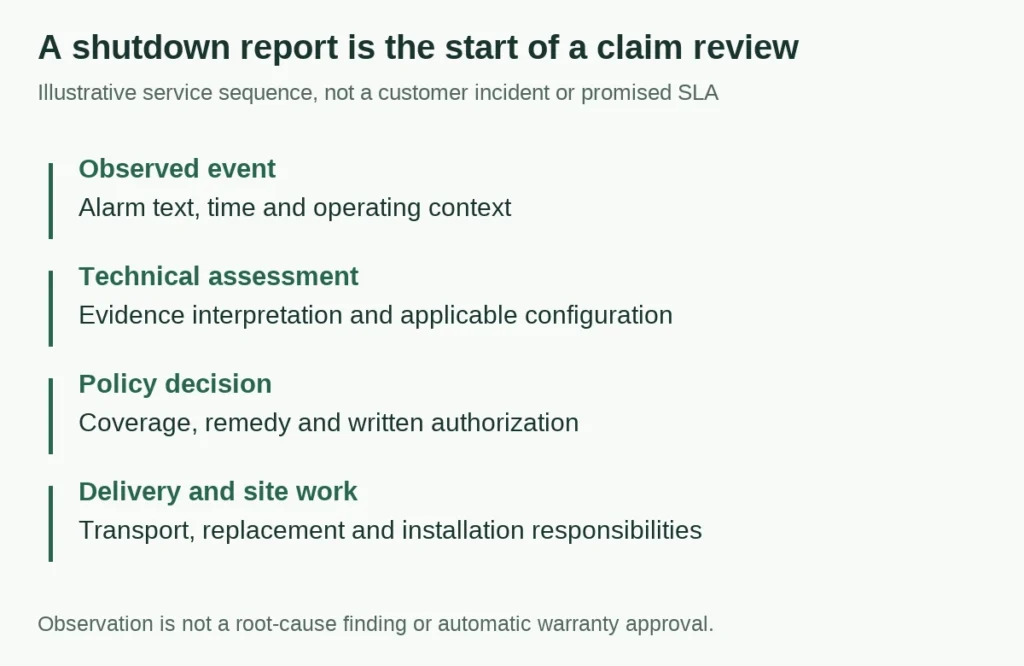
Figure 1. Each stage answers a different question. This sequence is not a customer incident or a promised service timetable.
Preserve the alarm wording, time and available records before they are overwritten. Where the battery and inverter clocks differ, note the offset instead of treating two different timestamps as separate incidents. A screen photograph without a device identity or time can be difficult to connect to the equipment being claimed.
The responsible technical party should specify any further observations or tests under the applicable service instructions. Electrical measurements, isolation, removal and internal work belong to qualified personnel. Do not open the battery, bypass protection or deliberately recreate a fault to produce a stronger claim.
Assemble evidence that resolves a particular uncertainty
A useful claim record connects the delivered unit to the installation and the event. Start with the battery model and serial number, the order or purchase record, commissioning information, inverter model, relevant firmware versions, operating mode and reported symptom. Send sensitive customer information only through the agreed service channel and only where it is needed.
Add the records that address the reported problem. If communication was lost after a change, the before-and-after versions and relevant event records matter. If reduced runtime is reported, energy use, measurement boundary and test conditions matter. Collecting every possible screenshot can delay a review and still leave the main question unanswered. Explain what each requested record will help establish.
The BYD Premium LVS service checklist, Version 1.1, includes system configuration, serial identity, inverter model, commissioning date and firmware information. It is a manufacturer-specific example of connected service records, not a ZJBESS procedure or permission to apply BYD service operations to another battery.
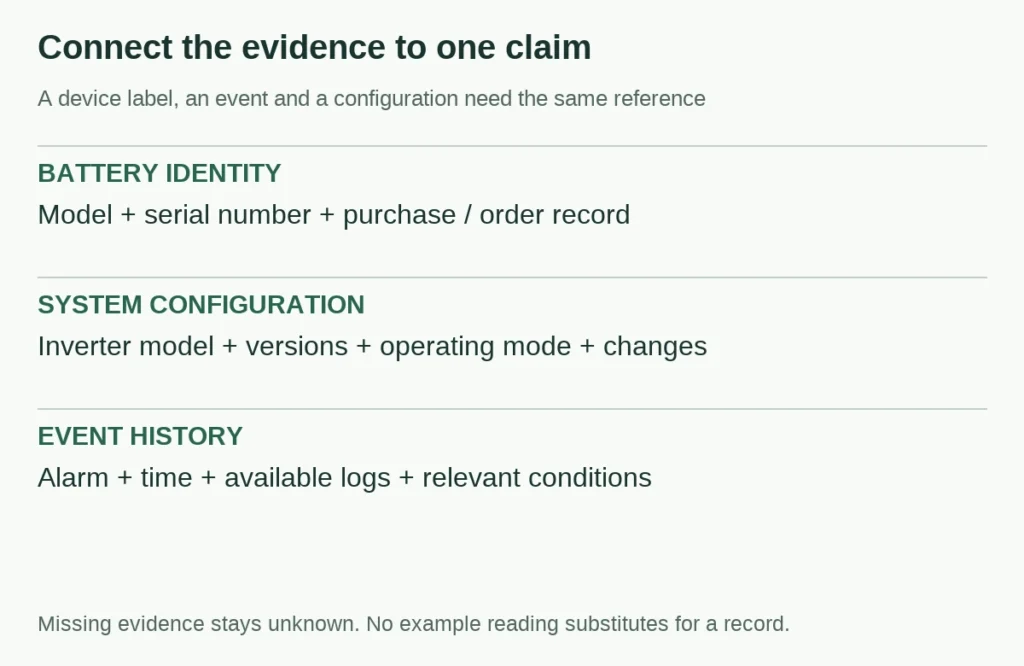
Figure 2. Keep three types of evidence connected to one case. A missing reading remains unknown; an example value must never replace it.
| Reported issue | Evidence that helps distinguish explanations | Decision it supports |
| Outage shutdown after a system change | Exact pairing, versions, backup mode, alarm time and change history | Whether the reviewed configuration covers the intended function |
| Lower runtime than expected | Starting condition, loads, measurement point, temperature and agreed endpoint | Whether results can be compared with an agreed performance criterion |
| Visible damage on receipt | Packaging and equipment condition, delivery record and time of discovery | Which delivery or service process should assess the event |
| Recurring alarm across several units | Separate serial records, configuration and event conditions | Whether a shared pattern exists before drawing a batch-wide conclusion |
The table is a review aid, not a list of automatic exclusions or mandatory claim conditions. The applicable terms and technical assessment determine what is required for the particular case.
For integration evidence, use the battery and inverter compatibility guide to distinguish a brand name from a tested model, version and operating mode. The claim record can reference the relevant commissioning evidence rather than reconstructing approval from a connector photograph.
Let the technical finding inform the coverage decision
First establish what the evidence supports about the event, then apply the relevant warranty terms to that finding. A confirmed fault may still have delivery arrangements to settle. Acknowledging a report, meanwhile, does not confirm its cause.
In the invented outage case, the assessment could support several different next steps. Evidence of a component fault may lead to a review of the remedy under the warranty. Evidence that the intended backup function was never supported may require a system-design decision. Incomplete records may require a narrowly defined follow-up. None of these outcomes should be chosen merely because a battery stopped.
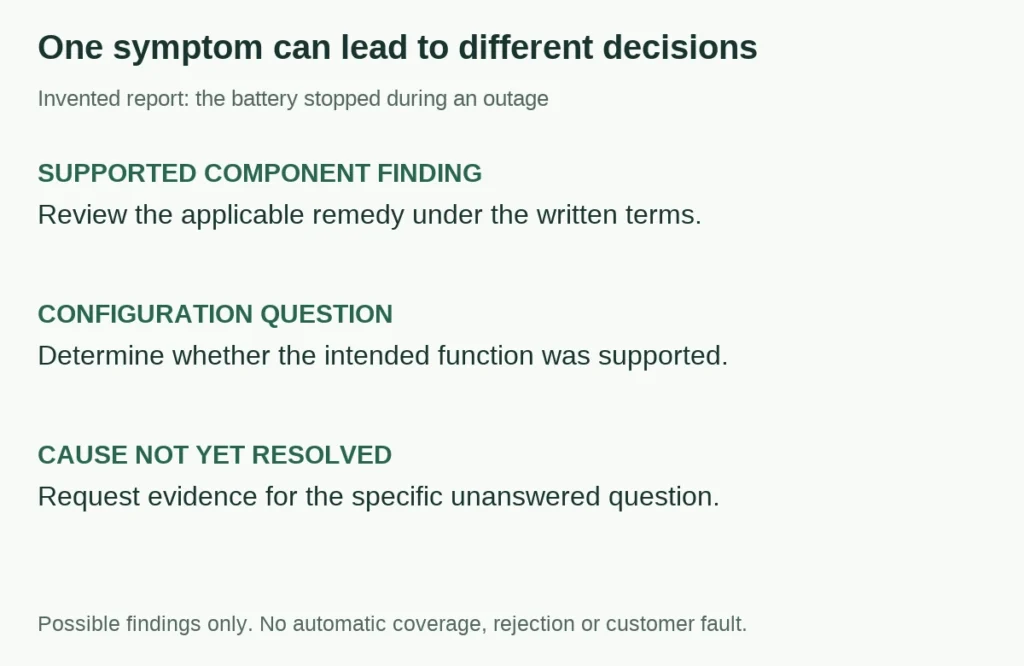
Figure 3. Alternative findings are possibilities, not diagnoses. An unresolved cause does not automatically establish coverage or customer fault.
When more evidence is needed, ask what conclusion it will help reach and who will review it. When a remedy is authorized, record what is being supplied and on what basis. A replacement component, battery module and complete battery are different items. The authorization should identify the item rather than leaving the word “replacement” open to interpretation.
If there is a disagreement, identify the disputed point: the technical finding, the applicable product or market terms, the remedy, or an unassigned cost. Describing the whole claim as rejected can obscure an agreement already reached on the other parts.
Allocate the work surrounding a replacement
A free replacement item does not assign all the tasks around it. There may be an outward shipment, return transport, customs handling, local delivery, removal, reinstallation and recommissioning. The original unit may need to be retained pending instructions rather than shipped immediately.
Define who authorizes each action, who arranges it and who pays or reimburses the agreed cost. Also identify any evidence required before expenditure is approved. A distributor who promises site service to a homeowner may need a local service arrangement even when the manufacturer supplies the replacement equipment.
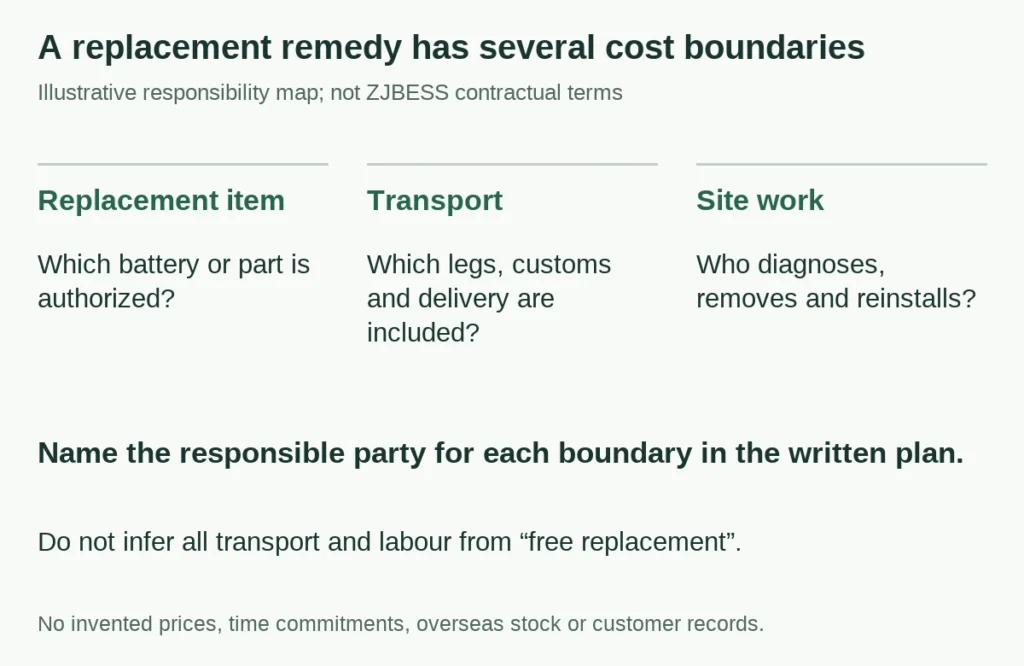
Figure 4. These are responsibility questions. The diagram assigns no contractual costs to ZJBESS, the distributor or the installer.
Read the exact product and regional terms. For example, Panasonic’s US installer FAQ distinguishes several warranty arrangements and attaches conditions to removal and reinstallation coverage. The Hoymiles shop warranty FAQ describes replacement and shipping coverage for confirmed in-warranty product defects in that shop’s stated scope. These examples show why the written offer matters; their conditions are not ZJBESS terms or a worldwide industry rule.
| Work or cost | What to settle in writing |
| Replacement item | Exact part or unit, approval authority and applicable product terms |
| Outward and return transport | Arranger, payer, destination, authorization and packaging instructions |
| Customs and local delivery | Responsible party and treatment of charges at the destination |
| Removal and reinstallation | Qualified service provider, approval and any reimbursement limit |
| Original unit and records | Retention or return instructions, old and new serial identity, and applicable remaining warranty scope |
A return battery needs a transport assessment appropriate to its actual condition and route. Do not assume that an ordinary outbound shipment arrangement also covers a damaged or suspect return. Obtain instructions from the responsible supplier and qualified transport provider before dispatching it. A UN 38.3 document alone does not arrange or approve an individual return shipment.
Compare remaining service cost under the same assumptions
Consider two entirely invented offers for the same approved replacement. Assume the item itself is free under both. Outward freight is USD 120, return freight is USD 80 and qualified site labour is USD 150. Ignore customs, taxes and other costs only for this example.Under Offer A, the distributor pays both freight legs and the full labour bill: 120 + 80 + 150 = USD 350. Under Offer B, both freight legs are covered and USD 100 of the same labour bill is reimbursed: 150 − 100 = USD 50 remains. The difference is USD 300 even though both offers say “free replacement.”

Figure 5. Hypothetical comparison only. The charges and allocations are invented, not quotations, market rates or ZJBESS policy.
The example shows how cost allocation changes what the distributor pays; it cannot predict a real claim bill. For an actual offer, replace every assumption with the applicable quotation and terms, including limits, required approvals, destination charges and who pays the service provider before reimbursement. Also check when reimbursement is due, even if the final cost allocation is the same.
Distinguish response time from completed service
An acknowledgment confirms that a report has been received. A handling conclusion states the assessed next action. Authorization permits an agreed remedy. Dispatch, delivery and completed site work occur later and have their own dependencies. Combining those stages into “resolved in three days” can create a customer promise that the service record does not support.

Figure 6. The sequence has no time scale. A response or conclusion does not mean the replacement has arrived or been installed.
For ZJBESS, the confirmed service wording is a response within 24 hours and, except for special periods or complex issues, a handling conclusion within three days. Those statements do not promise repair or replacement arrival within three days. Agree the implementation schedule for the particular claim and update it when transport or site-work information changes.
ZJBESS prepares spare parts at the factory. Replacement before return is decided case by case. This can inform a distributor’s discussion of local service stock and escalation, but it does not establish an overseas warehouse or automatic advance replacement. Ask which spare items suit the ordered product and which work requires specific technical authorization.
The standard-model order dispatch wording of 15 working days is a separate commercial statement, with transport time and the agreed order arrangements considered separately. It is not a replacement-shipment deadline. A service plan should use the confirmed claim schedule rather than borrowing a new-order lead time.
Keep warranty coverage separate from cycle life
A warranty period, an advertised cycle count and a retained-capacity criterion answer different questions. A cycle count is meaningful only with its test conditions and endpoint. A warranty requires its own coverage, eligibility and remedy terms. A performance claim requires the applicable measurement method and criterion.
A shorter runtime at the AC loads does not by itself measure battery capacity loss. Starting charge, the load profile, inverter losses, control limits and the discharge endpoint may all change the observed result. If capacity is disputed, first agree the measurement boundary and applicable conditions; then let qualified personnel carry out the specified assessment. A BMS percentage display or an uncontrolled household runtime comparison is not a substitute for that method.
For the technical distinctions, see how to read LiFePO4 cycle-life claims. Keep that evidence connected to the claim without inventing a capacity threshold or treating a claimed cycle count as a guaranteed number of operating years.
ZJBESS uses ten-year warranty and free-replacement wording within the scope of the corresponding product documents. Confirm the current written terms for the ordered model and destination. That statement does not by itself define freight, site labour, the warranty start, a retained-capacity threshold or every exclusion. Those details need their own agreement; they should not be filled in from another manufacturer’s policy.
Close the case around the equipment now in service
Once a remedy is authorized, the handover still needs to be completed and recorded. Record what action was carried out, the old and new serial identities where equipment changed, relevant versions, the completion date and any remaining action. Establish which warranty terms apply after replacement rather than assuming the warranty clock restarts.
If the configuration changed, determine whether the earlier commissioning or compatibility evidence still covers the installed system. A like-for-like physical enclosure does not prove that every version and operating condition stayed the same. Keep the applicable service record with the installation history so a later claim can be assessed against what is actually present.
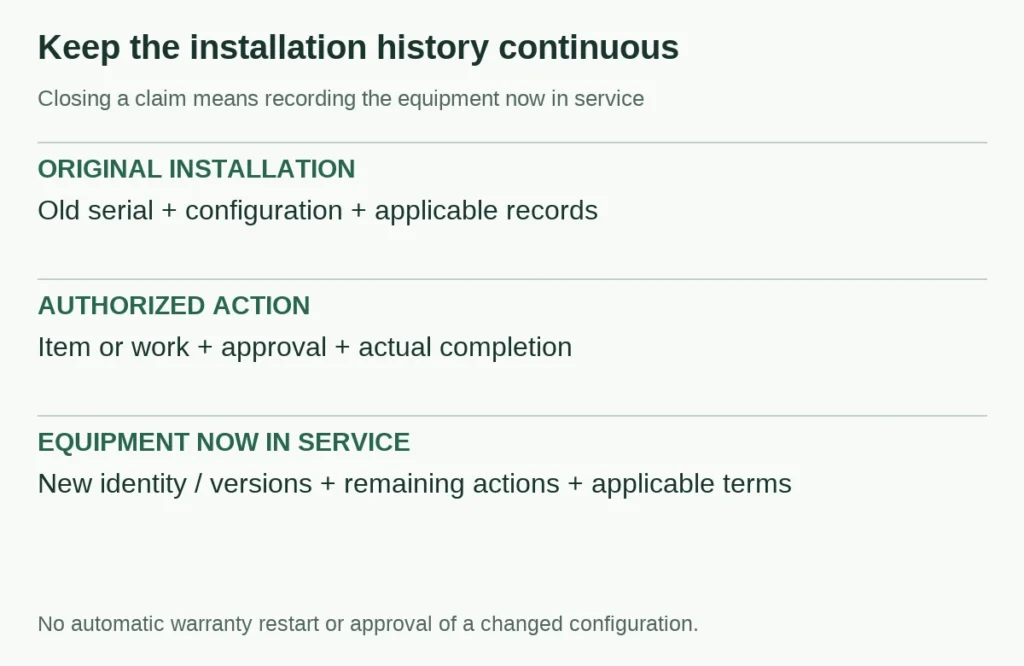
Figure 7. Maintain continuity when equipment changes. A replacement does not automatically restart the warranty or approve a new configuration.
Use the same linked records when reviewing recurring events across your customer base. Count separately reported incidents, confirmed findings, authorized remedies and completed actions. Several reports with a similar symptom do not prove a shared component defect. Compare the conditions and technical findings before drawing conclusions about a batch or changing the customer offer.
Before a new order, use the broader 48V LiFePO4 supplier checklist to connect warranty arrangements with specification, sample and repeat-order decisions. Settle the claim process before selling the service offer to a customer.
For a ZJBESS warranty or service discussion, send the battery model, destination, order or serial identity, reported event and relevant inverter configuration through our contact page. Ask for the applicable written terms, the next technical decision and the allocation of transport and site work. For planning support before stocking a range, use ZJBESS distributor support. These enquiries go to ZJBESS.
Discuss Your ProjectBack to Blog