

48V LiFePO4 Lithium Batteries for Solar and Inverter Backup
Compare seven ZJBESS models from 5.12 to 40 kWh. Find the right 48V LiFePO4 battery for your available space, backup loads and inverter, then ask us to review the pairing before you order.
- 10-Year Warranty
- 15 working days lead time
- CE EMC · RoHS · UN38.3
- No fixed MOQ
Compare 48V LiFePO4 Home Batteries
ZJBESS manufactures these 51.2V nominal LiFePO4 batteries in Shandong, China. Compare battery capacity and enclosure size independently. Before choosing a 48V LiFePO4 battery, check the installation space as well as the energy rating. Two models with the same nominal energy can fit very different spaces.

JJ5KW
5.12 kWh · 100Ah · Rack-mounted
Server rack battery for telecom cabinets, small offices and a first inverter battery bank.
FOB from US$630per unit, reference price
View JJ5KW details
BG10KW
10.24 kWh · 200Ah · Wall-mounted
Wall-mounted lithium battery for solar homes that need to keep the floor clear.
FOB from US$900per unit, reference price
View BG10KW details
WS10KW
10.24 kWh · 200Ah · Low-profile
Low-profile unit for under-stair spaces, shelves and rooms with limited height.
Quoted per projectsend model and quantity
View WS10KW details
DD5KW × 3
15.36 kWh · 300Ah · Stackable
Modules carried in one at a time, for upper floors and narrow delivery routes.
Quoted per projectsend model and quantity
View DD5KW details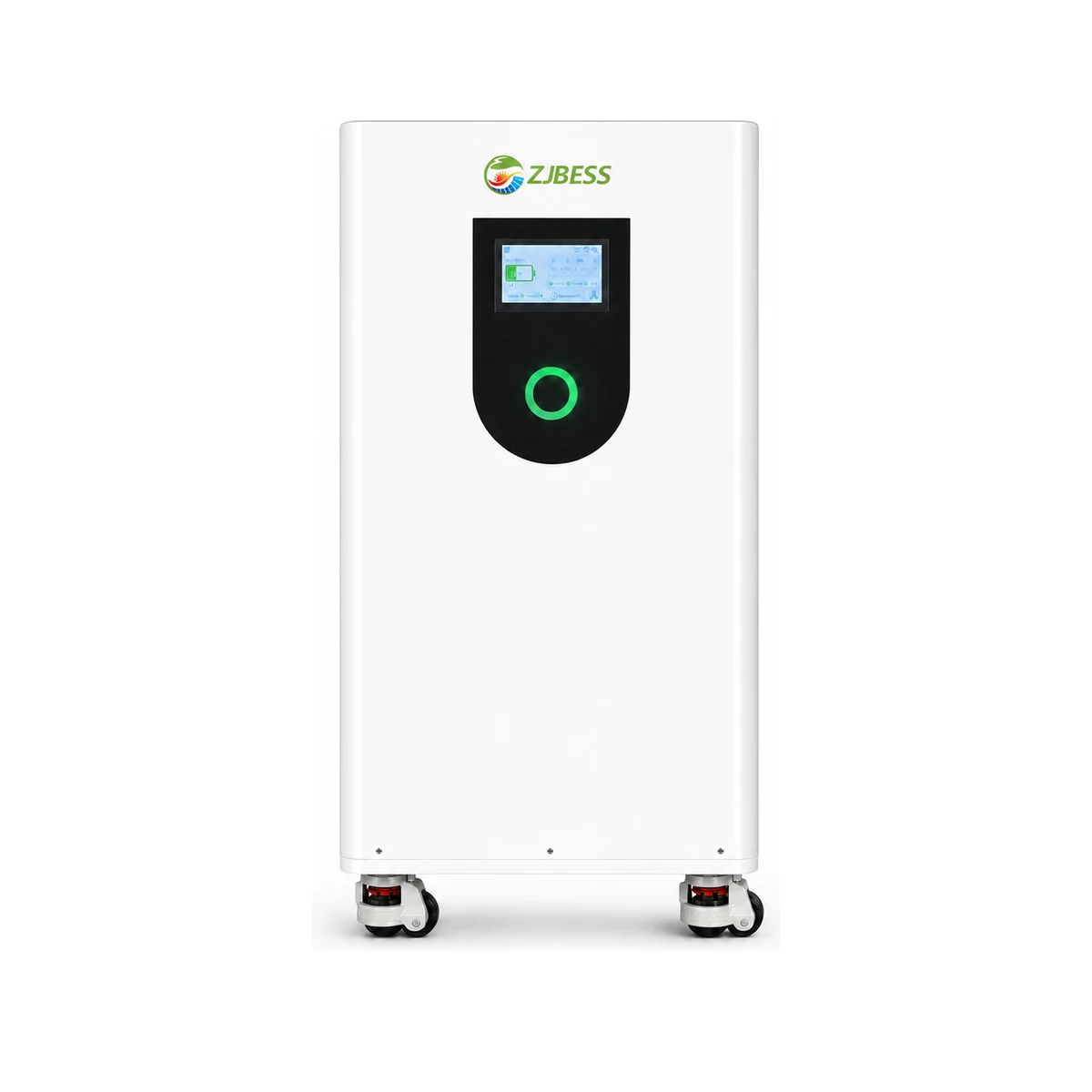
LS15KW
15.36 kWh · 300Ah · Floor-standing
Floor-standing inverter battery for 5–8kVA backup with an overnight reserve.
FOB from US$1,030per unit, reference price
View LS15KW details
LS20KW
20.48 kWh · 400Ah · Floor-standing
Tall, narrow cabinet for larger homes, small shops and longer outages.
Quoted per projectsend model and quantity
View LS20KW details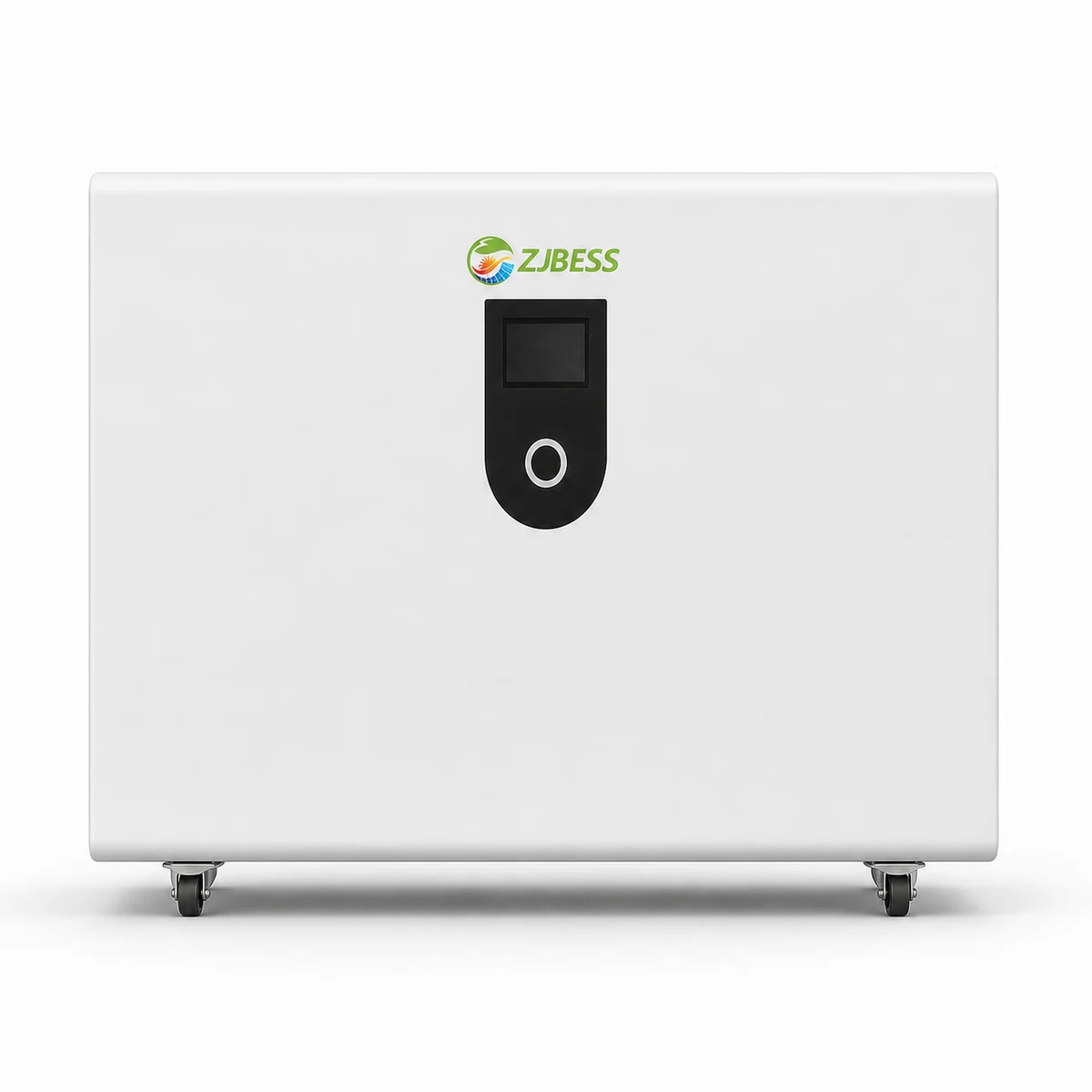
LS40KW
40 kWh · 781Ah · Floor-standing
One cabinet for clinics, farms and 10kVA sites that run through the night.
Quoted per projectsend model and quantity
View LS40KW detailsNot sure which size?
Send your inverter model and load list. We reply with a battery shortlist and runtime estimate.
Ask for a shortlist
FOB references are from the home battery quote guide (updated November 6, 2026). They exclude freight, duties and taxes. The full dimensions and parallel limits are in the table below.
| Model | Energy | Capacity | Format | Dimensions (W × D × H) | Published parallel limit |
|---|---|---|---|---|---|
| JJ5KW | 5.12kWh | 100Ah | Rack-mounted | 442 × 452 × 178 mm | 15 units |
| BG10KW | 10.24kWh | 200Ah | Wall-mounted | 780 × 440 × 450 mm | 15 units |
| WS10KW | 10.24kWh | 200Ah | Low-profile | 720 × 410 × 260 mm | 15 units |
| DD5KW × 3 | 15.36kWh | 300Ah | Stackable | 481 × 522 × 175 mm per module | 15 modules (5 stacks of 3) |
| LS15KW | 15.36kWh | 300Ah | Floor-standing | 450 × 300 × 900 mm (current revision) | 15 units |
| LS20KW | 20.48kWh | 400Ah | Floor-standing | 360 × 320 × 1195 mm | 15 units |
| LS40KW | 40kWh | 781Ah | Floor-standing | 1170 × 360 × 710 mm | 15 units |
Dimensions are listed as width × depth × height. The LS15KW size shown is for the current revision. If you are comparing against an older drawing, request the drawing for the revision on your quotation. DD5KW dimensions are per module. Its listed energy and capacity are for the three-module configuration.
Choose a Lithium Battery for Solar by Capacity
Start with an energy budget for the circuits you plan to support when specifying a LiFePO4 battery for solar storage. A lithium battery for solar self-consumption may discharge mainly in the evening, while backup may require keeping a reserve during the day. Use measured consumption and your target outage window to decide which models belong on the shortlist.
| Nominal class | First use case to evaluate | Models |
|---|---|---|
| 5kWh | A short backup window for lighting, network equipment and other measured essential circuits. | JJ5KW |
| 10kWh | A longer essential-load window or evening solar use with measured refrigeration demand. | BG10KW or WS10KW |
| 15kWh | Longer backup with several priority circuits or an overnight load that stays fairly steady. | LS15KW or DD5KW × 3 |
| 20kWh | Longer runtimes or more circuits after checking inverter capacity and the next recharge window. | LS20KW |
| 40kWh | A larger daily energy budget with enough charging capacity and suitable floor access. | LS40KW |
Use the load-based battery selection page to estimate required energy before choosing the enclosure. A larger pack stores more energy. Power still depends on inverter output and the battery bank’s permitted current.
How Long Will a Solar Battery Run?
The table converts each model into hours at a steady AC load. Use it to see which lithium battery for solar covers your night-time or outage loads before you check the inverter.
| Model | Nominal energy | 1 kW load | 2 kW load | 3 kW load | 5 kW load |
|---|---|---|---|---|---|
| JJ5KW | 5.12 kWh | 3.7 h | 1.8 h | 1.2 h | Over limit |
| BG10KW | 10.24 kWh | 7.4 h | 3.7 h | 2.5 h | 1.5 h |
| WS10KW | 10.24 kWh | 7.4 h | 3.7 h | 2.5 h | 1.5 h |
| DD5KW × 3 | 15.36 kWh | 11.1 h | 5.5 h | 3.7 h | 2.2 h |
| LS15KW | 15.36 kWh | 11.1 h | 5.5 h | 3.7 h | 2.2 h |
| LS20KW | 20.48 kWh | 14.7 h | 7.4 h | 4.9 h | 2.9 h |
| LS40KW | 40 kWh | 28.8 h | 14.4 h | 9.6 h | 5.8 h |
Assumptions: 80% usable capacity, 90% inverter efficiency, 51.2V nominal. “Over limit” means the DC current (≈ 109A at 5 kW) exceeds the JJ5KW continuous rating of 100A, so a single module should not carry that load. Starting surges, temperature and battery age reduce real runtime.
Choose by Installation Format
Wall-mounted
BG10KW · 10.24 kWh. Keep the floor clear where the wall and fixings are suitable.
Stackable
DD5KW × 3 · 15.36 kWh. Review module handling, base height and service access.
Floor-standing
LS series · 15.36 to 40 kWh. Check cabinet clearance and the route into the equipment room.
Use the battery enclosure comparison to plan access and service space. A rack unit needs rails, clearance and a suitable cabinet. A wall unit needs a verified mounting surface. A stackable unit can be carried in separate modules. A low-profile unit suits sites with limited vertical clearance. Floor-standing units need a delivery route, suitable floor and service space.
Lithium Battery for Inverter: Match by kVA, Voltage and Current
Inverter Battery Quick Match by kVA
Most buyers asking for an inverter battery already know the inverter size. Find your kVA rating, then check that the suggested 48V lithium battery covers both the DC current and two hours of backup.
| Inverter | AC load (0.8 PF) | DC current | Minimum nominal energy | Suggested ZJBESS models | Typical loads |
|---|---|---|---|---|---|
| 3 kVA | 2.4 kW | ≈ 52 A | 6.7 kWh | JJ5KW × 2 or BG10KW | Lighting, fans, TV, router and a fridge |
| 5 kVA | 4 kW | ≈ 87 A | 11.1 kWh | LS15KW or DD5KW × 3 | Add a freezer, pumps or a small office |
| 8 kVA | 6.4 kW | ≈ 139 A | 17.8 kWh | LS20KW | Add a 1HP air conditioner or several fridges |
| 10 kVA | 8 kW | ≈ 174 A | 22.2 kWh | LS40KW or LS15KW × 2 | Shops, clinics and multi-room homes |
Same assumptions as the worked example below. Confirm the bank’s continuous discharge current against the inverter’s maximum battery current before you order.
48V or 51.2V: What the Label Means
A 16-cell LiFePO4 string at 3.2V nominal per cell is 51.2V nominal. A 48V lithium battery and a 51.2V LiFePO4 battery may therefore be described within the same equipment class. Compare the inverter’s full DC operating range with the battery’s approved range and charging limits. The battery voltage and current guide explains how voltage affects the required DC current.
kVA is apparent AC power. kW is real power, and kWh is energy over time. Use the lower of the inverter’s real-power rating and kVA × load power factor for a first-pass estimate, then verify surge behaviour and the approved battery configuration.
| Inverter | AC load | Approx. DC current | Minimum nominal battery energy for the example |
|---|---|---|---|
| 5kVA | 4kW | 87A | 11.1kWh |
| 10kVA | 8kW | 174A | 22.2kWh |
Example assumptions: 51.2 V nominal DC, 90% inverter efficiency, 0.8 power factor, two hours at steady load and 80% usable battery capacity.
DC current ≈ AC watts ÷ (battery voltage × efficiency). Nominal energy ≈ load kW × hours ÷ (efficiency × usable fraction). For equipment selection, check current at the lowest permitted battery voltage as well as surge, BMS limits and recharge capacity. These are sizing examples. Follow the equipment manuals for final ratings. See the inverter and charger selection reference.
To shortlist a ZJBESS inverter battery combination, compare the 6.2kW ED inverter and the 13.2kW hybrid inverter, then send the model and firmware for review. CAN and RS485 describe interfaces. The battery protocol, pinout and firmware also need to agree. The LS15KW page lists Pylontech protocol, Growatt, Voltronic, Deye and Victron among its protocol-library entries. Confirm the exact inverter variant and battery revision with the battery and inverter compatibility guide.
The LS15KW BMS carries battery protocols for 18 inverter brands. Select the brand on the battery screen and connect over CAN or RS485:
- Pylontech
- Growatt
- Voltronic
- Luxpower
- WOW
- Schneider
- Deye
- Victron
- Sorotec
- SMA
- GoodWe
- Studer
- MUST
- Ginlong (Solis)
- Senergy
- TBB
- Megarevo
- Aiswei
For other models in the range, or an inverter not listed, send the inverter model and firmware. We confirm the protocol match before shipment.
Lithium vs Lead-Acid Inverter Batteries
For an inverter battery that cycles every day, or a site with daily load-shedding, the usable window and partial-charge behaviour matter more than the label kWh. A 10.24 kWh LiFePO4 battery used at 80% gives about 8.2 kWh; a lead-acid bank used at 50% needs about 16 kWh nominal for the same energy.
| Decision | Lead-acid bank | LiFePO4 bank |
|---|---|---|
| Charge profile | Follow the manufacturer’s settings for flooded or sealed construction. | Use the selected lithium battery’s approved profile and BMS limits. |
| Usable energy | Use the maker’s depth-of-discharge and discharge-rate guidance. | Account for the allowed state-of-charge window and inverter losses. |
| Changeover | Record the existing charger, cabling, and protection. | Verify settings and protection before the installer commissions the new bank. |
| Daily depth of discharge | Often limited to about 50% to protect cycle life. | Typically an 80–90% window, set by the BMS and inverter. |
| Frequent outages | Sulfation risk when the bank sits partly charged between outages. | Tolerates partial state of charge; no full-charge equalisation needed. |
| Maintenance | Flooded types need water top-ups and ventilation. | Sealed enclosure; the BMS monitors cell voltage and temperature. |
| Inverter communication | Usually none; the inverter reads voltage only. | CAN or RS485 lets the inverter follow BMS charge and discharge limits. |
If you already have an inverter, start with the lead-acid replacement guide before choosing a lithium ion solar battery.
Field Installation: ZJBESS Battery and Inverter in Nigeria
Footage filmed by our customer after commissioning a ZJBESS floor-standing LiFePO4 battery with a ZJBESS inverter. Three points from Nigerian distributor orders that we now check before shipment:
- Accessories packed separately. Cables and brackets are listed by carton so the installer can find them on site.
- Communication settings. Installers used to other brands may keep old protocol settings. We send the battery and inverter setting sheet with the shipment.
- Loads added later. Customers often connect more appliances after handover. Size the inverter battery with headroom, or plan the parallel expansion at the start.
What to Check Before Choosing a Model
Load and recovery. List the essential circuits, their measured energy use and the largest devices that can start together. Check how much time the system has to recharge from solar, grid or an approved generator input between outages. A larger 48V lithium battery may improve autonomy while still taking longer to recharge under the same charge limit.
Placement and access. Measure the final bay and the entire delivery route. Include door openings, bends, lifting or floor limits, and the clearance needed for connectors and service. For rack or stacked systems, ask for the total installed dimensions, including rails, base and inter-module space. Check mounting instructions and permitted operating conditions for the specific enclosure.
Electrical limits. Once you have selected a lithium battery for inverter backup, verify the required discharge current at the lower end of the supported voltage range. Confirm how the inverter handles starting surges and whether it respects BMS charge and discharge limits. If the bank will be expanded later, have the installer plan isolation, cabling and current sharing for both stages.
Compare delivered scope. For a lithium ion solar battery project, request a quotation that lists the exact model and revision, battery quantity, approved inverter or protocol, cables and protection included, applicable documents and shipping terms. This makes quotations easier to compare even when they quote the same nominal kWh.

Buying 48V LiFePO4 Batteries from the Factory
Every 48V LiFePO4 battery on this page is assembled and aged in our own workshop in Shandong, China. Each battery passes the four stages shown below before it leaves the line.
ZJBESS has no fixed MOQ for standard orders. Standard lead time: 15 working days. 10-Year Warranty applies under the written terms for the quoted battery. Request the CE EMC and RoHS certificates and the UN 38.3 and MSDS files for your shipment. See battery production, quality control and distributor support for the steps before order confirmation.
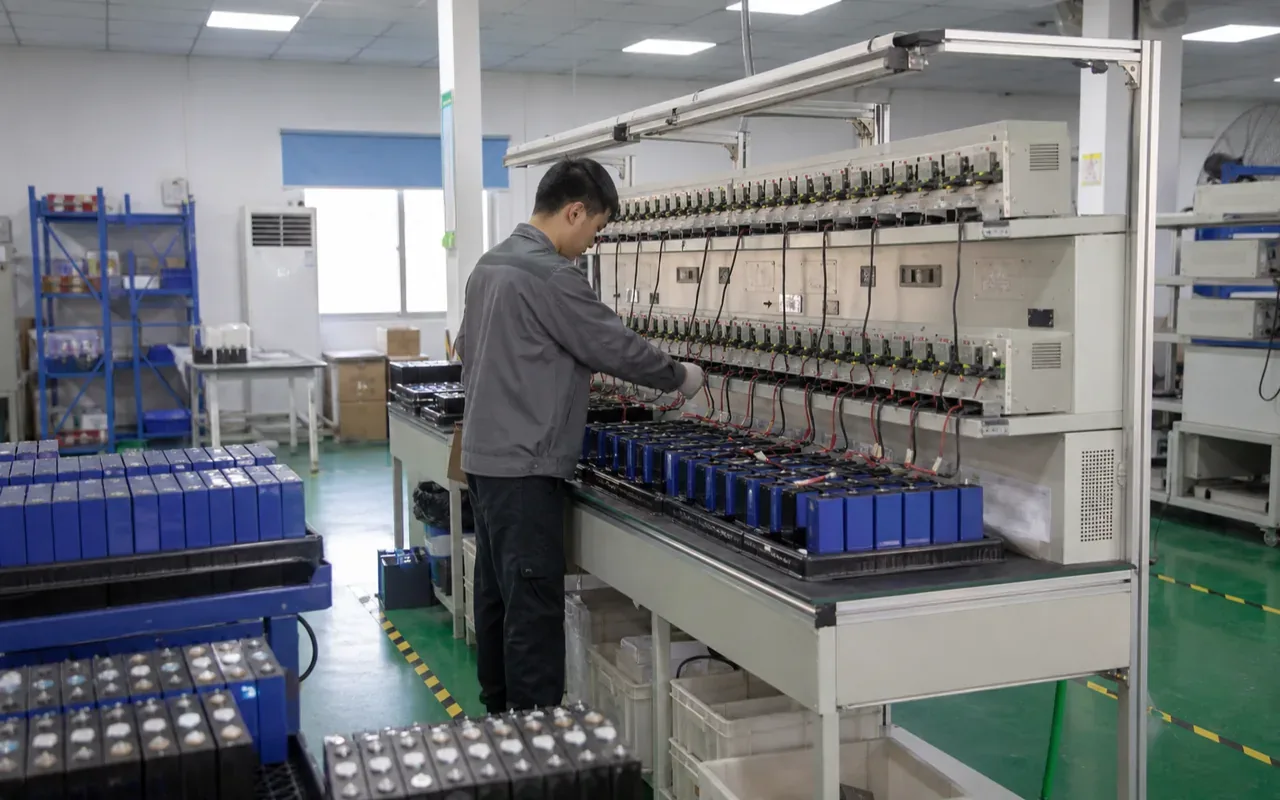 Cell sorting and matching
 BMS and module assembly
 Charge-discharge ageing
 Export packing
Certificates Available for Your Shipment
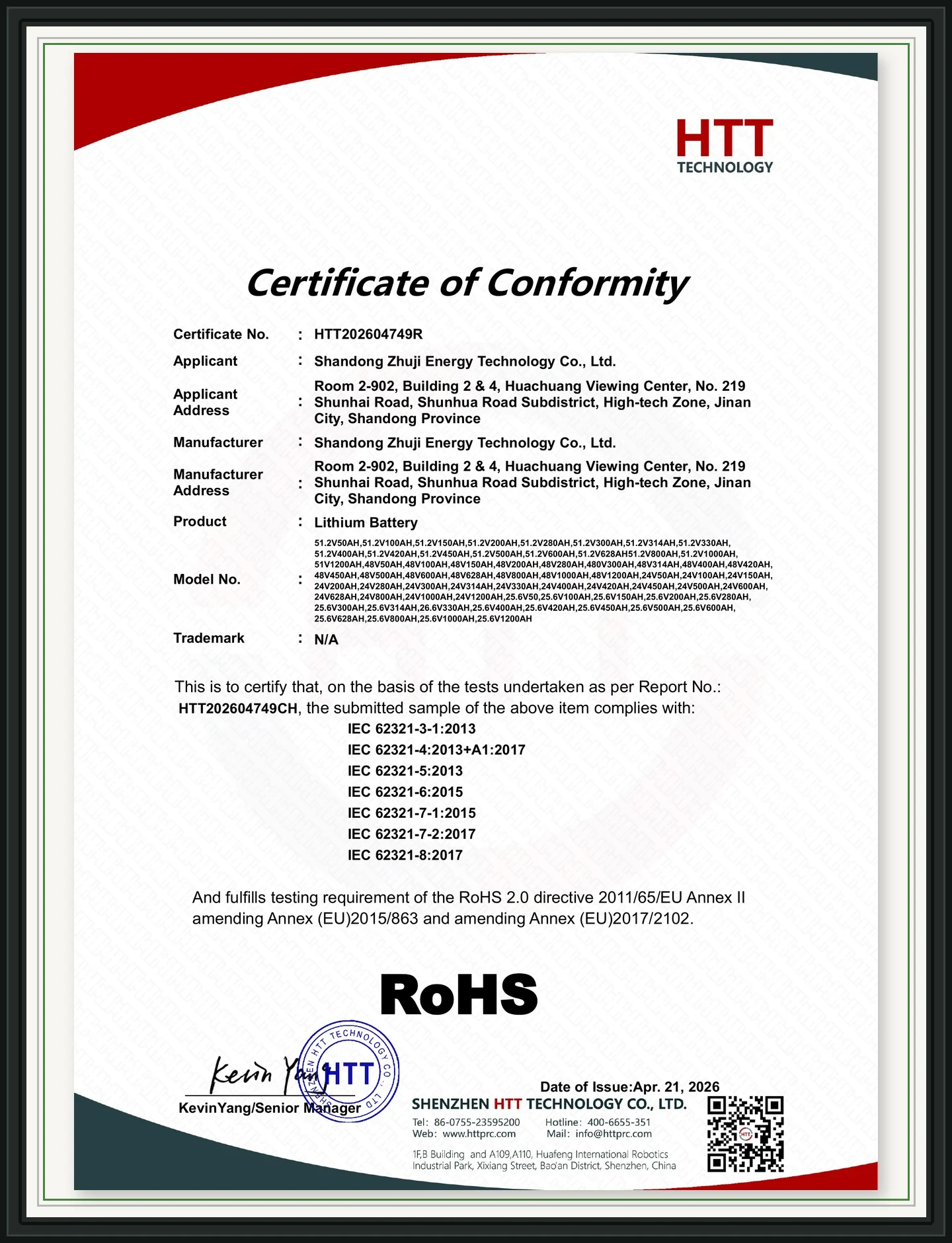 RoHS
Ask for the certificate and test report that match the exact model and revision on your quotation. See the UN 38.3 test summary guide for what a shipping summary should include.
Frequently Asked Questions
Can I combine a 48V lithium battery with one marked 51.2V?
Check the chemistry, operating range and manufacturer’s parallel rules for each exact model. A 48V-class label only identifies the equipment family. Use the approved matching modules and settings.
How do I size a 48V LiFePO4 battery for whole-home backup?
Measure the energy used by the circuits you want to keep on during the target outage, then allow for conversion losses and reserve. Check simultaneous loads and starts separately. See the residential backup planning guide for how to separate critical and whole-home loads.
Will a LiFePO4 battery for solar work with my existing inverter?
Send the exact inverter model and firmware, battery voltage range, and any BMS communication requirements. The installer should verify charge settings, discharge limits, cable pinout and fault response before the system is commissioned.
How many home batteries can be paralleled?
The comparison table lists the published model limits. For the DD5KW stack the limit counts modules. A project may use fewer after current sharing, communications and protection are reviewed. See the parallel LiFePO4 battery planning guide.
Can ZJBESS supply a private-label battery?
Send the base model, quantity and any branding, packaging or protocol requirements. The OEM and ODM review confirms which changes can be quoted and what evidence is required.
What should I check before shipping a lithium ion solar battery?
Confirm the exact models, package count and dimensions, destination and shipping scope with your forwarder. Request the applicable UN 38.3 test summary and the shipment documents for those models.
How much does a ZJBESS 48V LiFePO4 battery cost?
FOB reference prices per unit are US$630 for the JJ5KW, US$900 for the BG10KW and US$1,030 for the LS15KW (updated November 6, 2026). They exclude freight, duties and taxes. For 3 units or more, or other models, request a volume quote. See the quote comparison guide.
Which inverter battery suits a 5kVA inverter?
At 4 kW AC the battery supplies about 87A DC. Two hours at that load needs about 11.1 kWh nominal, so the LS15KW or a three-module DD5KW stack is the usual starting point. Check the inverter’s maximum battery current first.
Can I mix a lithium battery for solar with my old lead-acid bank?
No. The two chemistries need different charge voltages and the BMS cannot protect cells it does not monitor. Replace the bank and update the inverter settings. See the lead-acid replacement guide.
How long does delivery take?
Standard lead time is 15 working days from deposit, with no fixed MOQ. Sea transit depends on the destination port and is quoted separately.
Request a Battery and Inverter Review
Send your location, model shortlist, inverter model and firmware, load list and target runtime. For a distributor order, include your expected quantity and shipping destination. You can also contact ZJBESS about the project.