Choose an off-grid solar system when the site needs to supply its essential loads without relying on the utility. If the grid is available and the main concern is outages, a hybrid system with a dedicated backup panel may be a better fit. The decision depends on three measurements: the energy used between charging periods, the largest load that must start while others are running, and the solar energy the site can recover during its weakest month.
On-Grid vs Hybrid vs Off-Grid Solar
The quickest way to tell these systems apart is to ask what happens when the utility goes down. An ordinary on-grid system follows the utility and normally shuts down during an outage. A compatible hybrid system can isolate its backup circuits and keep them energized within its battery and inverter limits. An off-grid system forms its own local AC supply. It needs a plan to carry loads when solar output drops and to restore the battery reserve afterward.

Figure 1. Compare the electricity supply boundary before selecting equipment.
| On-grid | Hybrid | Off-grid | |
|---|---|---|---|
| During a brownout | Shuts down with the grid; no backup | Keeps the backup circuits running from the battery, within inverter and battery limits | Unaffected; the system is the supply |
| Battery | None | Yes, sized for the backup circuits and outage hours | Yes, sized for days of autonomy |
| Utility paperwork | Net-metering application to the distribution utility if you want export credit | Same as on-grid if it exports; check the utility's rules if it does not | None with the utility; local electrical permits still apply |
| Typical Philippine site | Reliable grid, main goal is a lower daytime bill | Grid present but brownouts disrupt work, refrigeration or water supply | Island, farm or resort far from the lines, or grid too unreliable to plan around |
| What sets the size | Daytime consumption and roof area | Backup circuits × brownout hours, plus daytime solar | Daily energy × days of autonomy, plus PV to recover the reserve |
| ZJBESS example | Not in our range: use a grid-tie PV inverter | MAX-II 13.2kW hybrid inverter: 220/230/240 VAC, 50/60 Hz grid output, two 8,000 W PV inputs, 160 A maximum charging current | ED6.2kW off-grid inverter: 6,200 W rated, 12,400 VA peak, 60–500 VDC MPPT range, 120 A maximum charging current |
Net metering in the Philippines is open to renewable-energy systems of up to 100 kW, and the Energy Regulatory Commission amended the rules in September 2025. The application goes through your distribution utility, so an on-grid or exporting hybrid system has a paperwork step that an off-grid system does not. A hybrid system that is not exporting still connects to the utility supply, so ask the installer what your utility requires before you decide.
A property with a utility connection and intermittent outages can often use a smaller backup circuit group than a remote property that depends on its own power all day. Define that circuit group before requesting a quotation. Ask the installer to check the local electrical requirements and, for any grid-connected equipment, the utility’s connection and export conditions. The U.S. Department of Energy guide to PV systems describes the functional difference between a standard grid-tied installation and battery-backed or stand-alone arrangements.
Which System Fits Your Site in the Philippines
Start from the grid you actually have, not from the equipment.
The grid is reliable and the goal is a lower bill. An on-grid system is the simplest and lowest-cost route. It does nothing for brownouts, so do not buy it expecting backup.
The grid is there, but brownouts stop the work. Choose a hybrid system and put only the circuits that must stay on, such as refrigeration, lights, Wi-Fi and a water pump, on a separate backup panel. Size the battery for brownout hours, not days; our home battery sizing guide walks through that calculation. How a hybrid inverter switches over during a brownout, and how to read its four datasheet limits, is covered in What Is a Hybrid Solar Inverter and How to Choose One.
There is no grid, or it cannot be planned around. Choose off-grid. The battery now carries every night and every cloudy spell, so autonomy and PV recovery, covered below, decide the size.
When off-grid is the wrong choice. If a reliable grid connection is available at the property, going off-grid usually means paying for days of battery storage and a larger array to cover rare bad weeks that the grid would otherwise cover. A hybrid system with a generous backup panel often delivers the same day-to-day result for less. Off-grid makes sense when the grid is absent, very expensive to extend, or unreliable for long stretches.
When a hybrid is not needed. If brownouts are rare and short, and nothing on the property is critical, a hybrid inverter and battery add cost that an on-grid system with a small UPS for the router may cover.
Read the Off-Grid Solar System Diagram
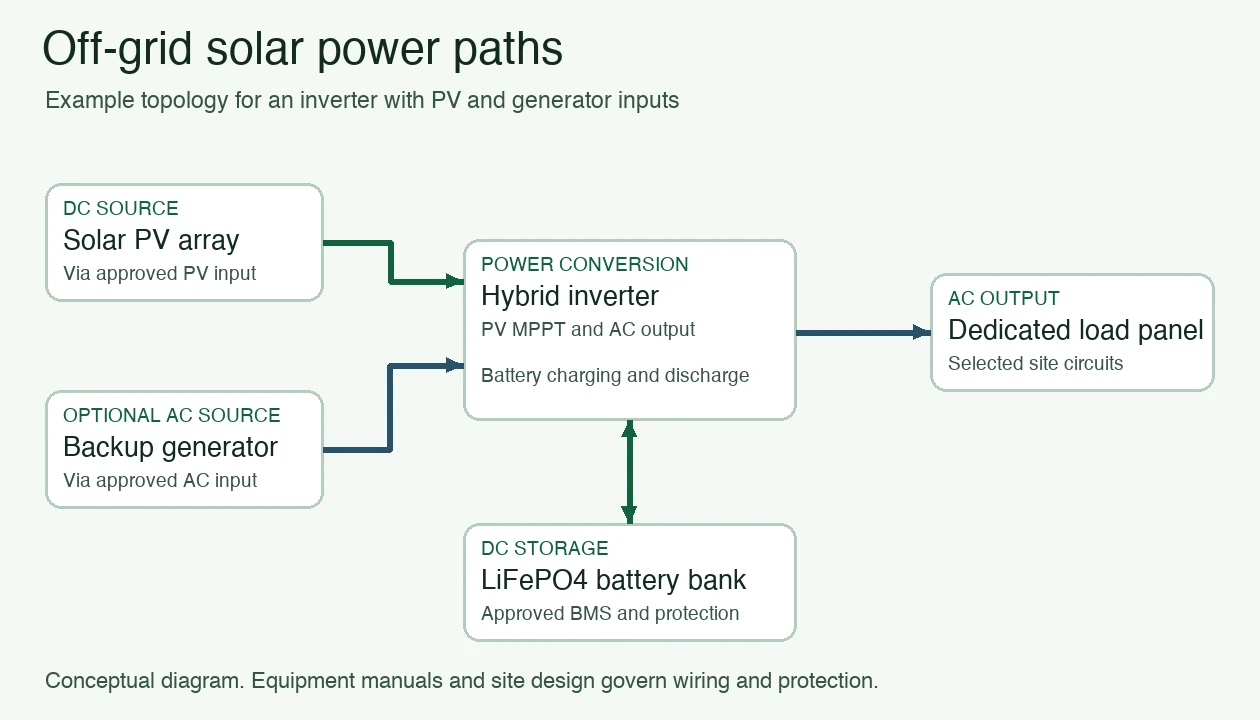
Follow the energy path rather than counting boxes. In the illustrated DC-coupled arrangement, solar modules send DC power through an approved PV input to an MPPT charge controller. It adapts the array output to the system’s DC side. The battery accepts charge through its approved connection and supplies the inverter when available solar falls short. The inverter forms AC power for the loads on its output. A generator, where supported, enters through an approved AC input or transfer arrangement.

Figure 2. Conceptual power paths for a DC-coupled system with an optional generator.
An AC-coupled retrofit works differently. A separate PV inverter delivers AC power to a supported bus. If the grid fails, a grid-following PV inverter can continue operating only where a compatible grid-forming source, control strategy and system arrangement support it. In some designs it stays on the utility side and stops during outages. In others it feeds the backed-up bus and the system must manage surplus solar when a large load switches off or the battery stops accepting charge. Ask how the system restarts from a low battery, especially if the existing solar inverter needs an AC reference to start.
Ask for the approved drawing before ordering. It should identify the supported AC inputs, backed-up circuits and exact battery and inverter models. The installer should verify the PV input limits across expected temperatures, the battery voltage window, protective devices, earthing and isolation against equipment manuals. A diagram in a buying guide describes system behavior. It does not specify cable sizes, pinouts or protection settings. Victron Energy’s system-design manual explains the topology and control implications of different PV connections.
What those connections look like on a real off-grid inverter

The diagram above maps onto four power connections on the underside of our ED6.2kW off-grid inverter. PV INPUT takes the solar array; its published MPPT range is 60–500 VDC, with a maximum PV input of 6,200 W and 18 A. DC INPUT is the battery connection for a 48 VDC bank. AC OUTPUT feeds the load panel. AC INPUT is where a generator, or a grid supply used only for charging, enters.
Next to them are the communication ports: RS232, and a BMS/RS485 port for the battery’s management system, plus a dry-contact relay terminal (NC/C/NO). On off-grid inverters of this type, the relay switches when the battery voltage falls to a set warning level, which is why it is often wired to start a generator; check the trigger and recovery voltages in the ED manual before connecting one.
Two numbers on that panel matter most for sizing. The maximum charging current is 120 A, which caps how fast the battery can be refilled in one day. And at the full 6,200 W output, the battery side carries roughly 129 A at 48 V before conversion losses, so the battery bank’s continuous discharge rating and the DC cables must handle that current.
Make a Daily Load Schedule
Write down what needs to run, when it runs and what can be deferred. A refrigerator cycles, so the nameplate rating multiplied by 24 hours can overstate its daily energy use. A router draws far less power but may run continuously. Use metered energy when practical and record motor starts separately. The battery energy calculation and the inverter surge check answer different questions.
| Essential load group | Example daily AC energy | How to confirm it for your site |
| Refrigeration | 2.4 kWh | Meter the combined loads over a representative day and record compressor starts separately. |
| Fans | 1.4 kWh | Example: four 50 W fans for seven hours. Replace the power and hours with your own values. |
| Lights and connectivity | 0.6 kWh | Example: 60 W combined for ten hours. Record continuous network equipment separately if it stays on longer. |
| Other essential loads | 1.6 kWh | List each device and consider whether it can run when PV output is available. |
| Total | 6.0 kWh | Add inverter idle consumption and excluded loads to the real design. |
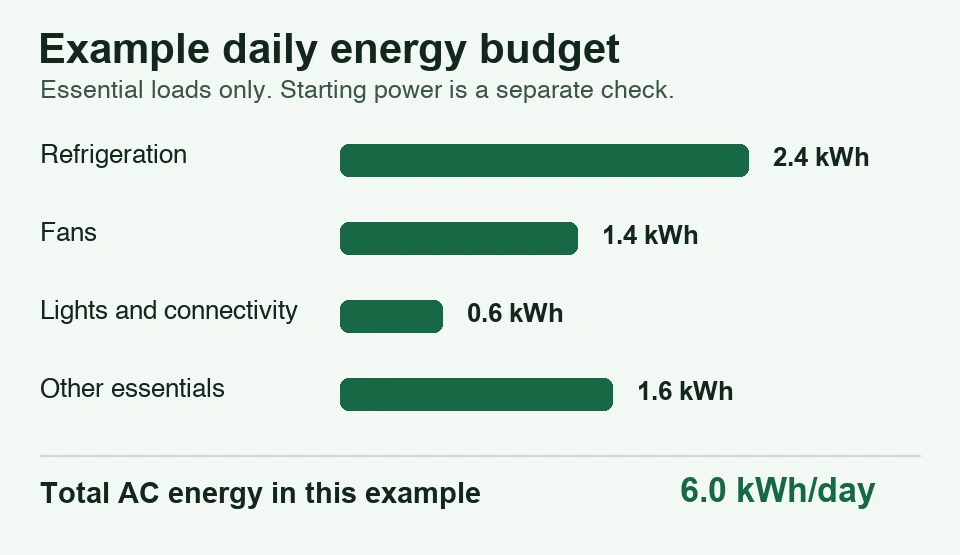
Figure 3. Illustrative load budget. The bars show energy per day, while starting power is checked separately.
Schedule discretionary loads before adding battery capacity. Moving a water pump or a laundry cycle to a period with available solar can reduce overnight battery use. If the pump must start at the same time as refrigeration, confirm the combined startup demand and surge duration. A bank with sufficient kWh can still reach its current limit during a motor start, even when its state of charge looks healthy.
Work Through Battery, Inverter and PV Sizing
Battery energy and reserve
Suppose the site uses 6.0 kWh per day at the AC loads and wants 1.5 days of reserve. That requires 9.0 kWh at the load. At 90% inverter efficiency and an assumed 80% usable battery fraction, the illustrative nominal battery energy is:
6.0 kWh/day × 1.5 days ÷ (0.90 × 0.80) = 12.5 kWh nominal.
The assumed fractions are for this calculation. For a quotation, use the permitted operating window of the exact battery and allow for omitted loads, temperature and aging where they matter to the service target. If the site has a grid and you only need to ride through brownouts, size for outage hours instead of days of autonomy; the home battery sizing guide shows that method.
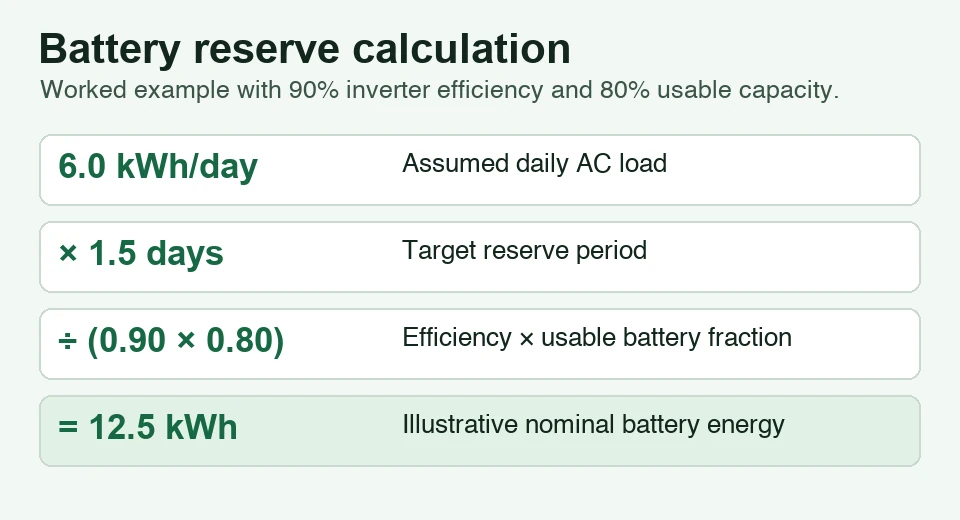
Figure 4. Daily energy and reserve set the battery energy requirement.
Inverter power and battery current
Size inverter continuous power for loads that can run together, and check the largest credible start while those loads are already on. Compare the equipment ratings in the same units and at the relevant operating conditions. Ask the supplier to confirm the DC current the proposed battery bank can support near its lower operating voltage, the BMS response to surge, and any limits when the unit is hot. An inverter’s headline kW rating alone cannot establish what the battery and inverter will deliver together.
PV for a normal day and for recovery
Assume 3.5 peak sun hours and an illustrative net energy factor of 75%. Meeting the normal 6.0 kWh daily load would require about 2.29 kW of PV on that example day. Restoring the 9.0 kWh AC-equivalent reserve over two comparable sunny days adds 4.5 kWh per day. Under the same simplified assumptions, the daily energy target rises to 10.5 kWh and the indicative array size to 4.0 kW.
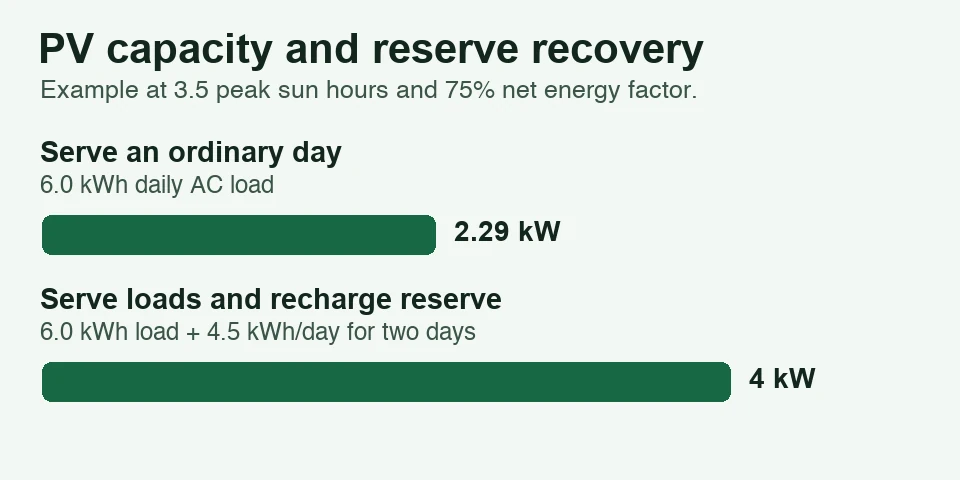
Figure 5. An array sized for ordinary daily demand may take longer to restore a depleted reserve.
The 3.5-hour input is a worked assumption. Use the project location, actual roof orientation, shading and the relevant low-yield month. The Global Solar Atlas can help screen the resource before a site assessment. A monthly average can hide consecutive cloudy days, so check how much load you can defer, how quickly PV or another approved source can recharge the bank, and what the system should do when reserve runs low. Ask the installer to verify the PV and charger limits before selecting modules and strings.
Off-Grid Solar System FAQ
Can existing grid-tied solar keep running during a blackout?
It depends on where the PV inverter is connected and whether the supported equipment can form and control the backup bus. Give the installer the PV inverter model and firmware. Ask which circuits stay live, how surplus PV is managed, and how the system restarts after a deep discharge.
Does a 10 kWh battery provide 10 kWh to my appliances?
A 10 kWh label normally describes nominal battery energy. The permitted discharge window, inverter conversion, standby consumption, temperature and other loads affect the AC energy available to appliances. Use the nominal figure to shortlist models and ask for the assumed conditions behind any runtime estimate.
Do I need a generator?
A generator is one way to cover prolonged low-solar periods if the equipment supports the arrangement. The decision depends on the loads you can shed, the maximum acceptable downtime, and how reliably the bank can be recharged. Verify the generator’s supported input or transfer design and the combined power needed by site loads and battery charging.
Which information makes an equipment quote usable?
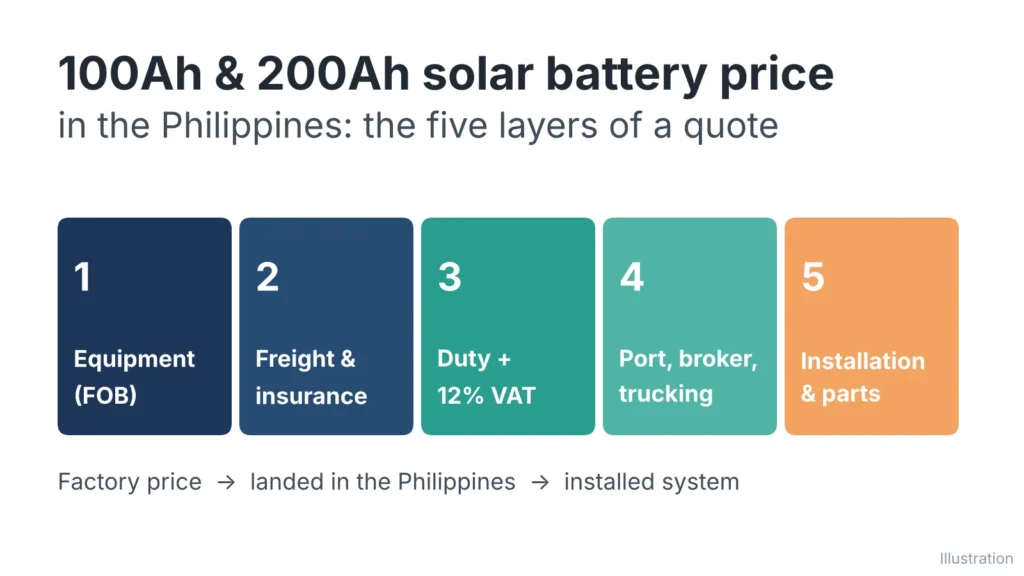
Ask for the model and revision of each main component, applicable voltage and current limits, the agreed supported topology, and the commissioning checks. Separate the equipment scope from local installation and commissioning. For a remote site, agree who will handle recurring alarms, service visits and replacement access after handover. For what each part of a Philippine quote covers, from FOB price to installation, see 100Ah and 200Ah Solar Battery Price in the Philippines.
Prepare Your Site Brief
Send the project location, existing equipment models, measured daily energy, largest simultaneous loads, target reserve and available charging sources. If the site already has solar or a generator, include the nameplates and explain which circuits must remain powered. Use the ZJBESS off-grid and weak-grid solution page to review the equipment scope, and the 48V home battery comparison to shortlist capacities and enclosure formats. Discuss your equipment requirements with ZJBESS so the battery and inverter can be reviewed against the actual application.
Discuss Your ProjectBack to Blog